Houthi Missile Attempt on Riyadh Raises Fresh Risks for Europe’s Oil Supply
The intercepted strike and reported pressure on Saudi export routes heighten concerns for UK and EU refiners, sterling-sensitive energy costs and London markets.
Saudi Arabia said Yemen’s Iran-aligned Houthi movement attempted to strike Riyadh with a ballistic missile overnight, an escalation that sharpens the focus in London and across Europe on energy security, shipping risk and the inflationary consequences of renewed disruption in the Red Sea.
The Saudi-led “Coalition to Restore Legitimacy in Yemen” said on Saturday, September 19, that Houthi forces had for the first time attempted to target the Saudi capital with a ballistic missile. Brigadier General Turki al-Maliki, the coalition’s official spokesman, said on X that the missile had been “intercepted and destroyed”.
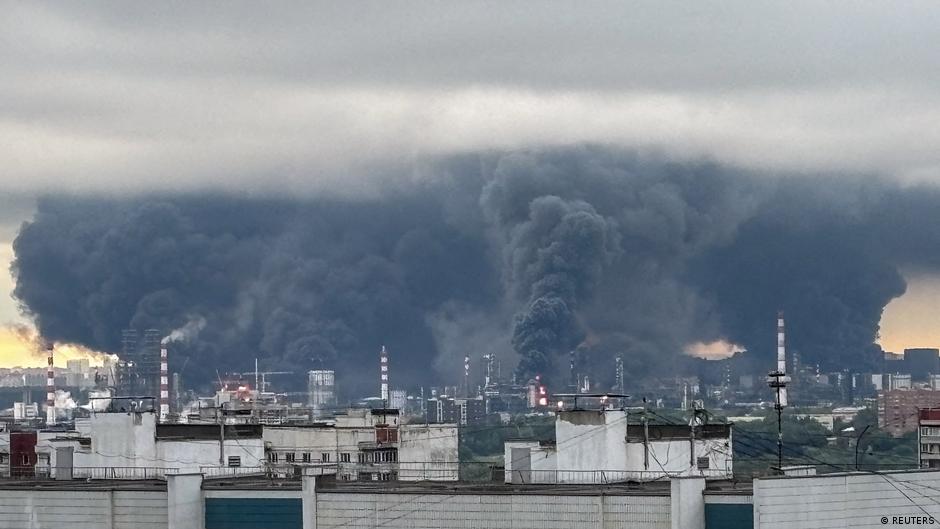
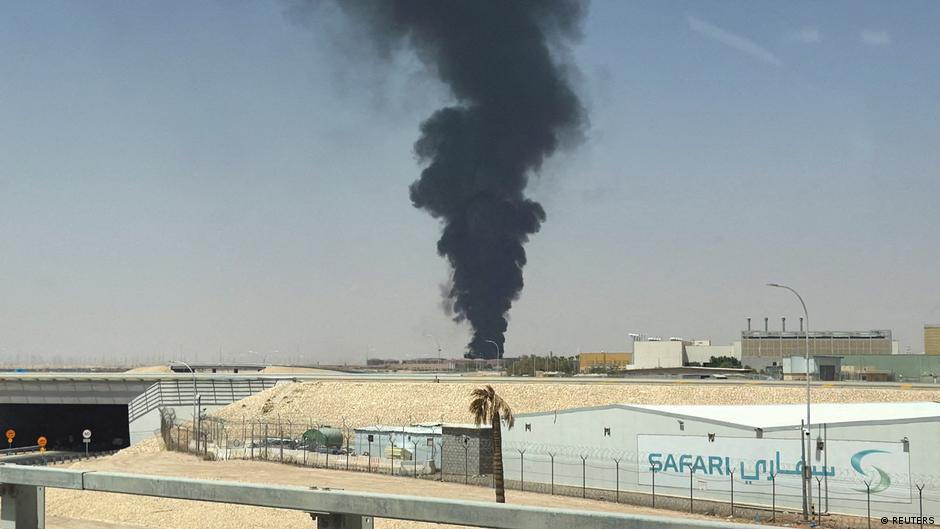
Air raid sirens were sounded in Riyadh during the night, and some residents reported hearing an explosion. There were no immediate reports of casualties or damage. Later, a column of smoke was seen near the airport. AFP, citing its correspondent, reported that a fuel tank belonging to Saudi Aramco, the kingdom’s largest oil company, was on fire and that the blaze was extinguished. It was not clear whether the fire was connected to the attempted missile strike. Aramco did not respond to journalists’ requests for comment.
For British and European markets, the significance lies less in the immediate physical damage reported and more in the pattern of attacks around Saudi export infrastructure. Saudi authorities also said the Houthis had tried to attack civilian infrastructure, including facilities in the Red Sea port city of Yanbu, but that those attempts were thwarted. The Houthis, for their part, claimed they had used drones, cruise missiles and ballistic missiles to hit “important targets” in Riyadh and Aramco infrastructure in Yanbu.
Energy Risk Moves Back Onto Europe’s Dashboard
The episode comes at a sensitive point for European refiners and energy traders. On September 11, the Financial Times reported that Saudi Arabia had halted operations on the East-West pipeline, which ends at the port of Yanbu, after a drone attack launched from Iraqi territory. On September 18, Saudi Aramco notified at least two European refineries that it would not supply them with oil in October, Bloomberg reported. According to Bloomberg, the pipeline is expected to be partially restarted within days and fully restored within about a month and a half.
That timetable matters for the UK and the European Union because Saudi flows through Yanbu had become more important after the start of the war involving the United States and Israel against Iran, which has substantially complicated tanker passage through the Strait of Hormuz. In response, Saudi Arabia increased exports via the East-West pipeline, shifting more crude toward the Red Sea route.
In recent weeks, however, the route’s capacity has fallen because of Houthi attacks on Saudi tankers in the Red Sea. In August, about 2.5 million barrels per day were shipped through Yanbu, the International Energy Agency said, the lowest level since 2013.
For London markets, the central question is whether a series of regional attacks becomes a sustained constraint on crude flows into Europe.
Any further disruption to Saudi export routes would feed directly into European energy pricing, refining margins and transport costs. In Britain, the sterling impact would be watched closely: a weaker pound makes dollar-priced oil more expensive for UK buyers, increasing the pressure on fuel costs and potentially complicating the inflation outlook for consumers and businesses. Even when supply losses are temporary, the risk premium attached to crude and shipping can move quickly through London-listed energy shares, airline stocks, logistics companies and consumer-facing businesses.
Bab el-Mandeb Adds to Shipping Pressure
The wider maritime picture is also deteriorating. On September 11, Reuters and AFP reported that the Houthis had captured strategically important islands in the Bab el-Mandeb Strait, which connects the Red Sea with the Arabian Sea. Roughly 12% of global cargo traffic passes through the strait, including oil trade, and it has become especially important to Saudi Arabia after the closure of Hormuz. The Houthis said shipping through Bab el-Mandeb was “safe for all commercial vessels except Saudi ones”.
The previous day, it also emerged that the Houthis had taken control of the port of Mocha on Yemen’s coast along the Bab el-Mandeb Strait. Reuters reported that the Houthi advance was being directed by Iran’s Islamic Revolutionary Guard Corps. Sources in Tehran said Iran was seeking to open a new front in its confrontation with the United States.
The risk for European business is that a conflict already affecting crude supply could widen into a broader shipping and insurance shock. UK and EU importers depend on predictable routes, even when their direct exposure to Saudi oil varies by company and country. Higher war-risk premiums, rerouting delays and uncertainty around Red Sea traffic can raise costs for refiners, manufacturers and retailers long before shortages appear at the pump.
The latest Riyadh incident follows another Saudi allegation earlier in the week. On September 16, the Saudi-led coalition said the Houthis had attacked Mecca, Islam’s holiest city, with a drone and that the aircraft was shot down on approach. The Yemeni rebels denied the accusation.
For London investors, the immediate reaction will likely centre on oil benchmarks, sterling’s sensitivity to imported inflation and the performance of energy-intensive sectors. The longer-term concern is whether Saudi Arabia can keep alternative export channels open while Hormuz remains constrained and the Red Sea becomes more dangerous for Saudi-linked shipping.
The attempted strike on Riyadh did not produce confirmed casualties or destruction, according to the Saudi account. But it has added another layer of uncertainty to a supply chain that European refiners, insurers and market participants were already watching closely. With Aramco reported to have warned at least two European refineries of an October supply interruption, the next few days around the East-West pipeline restart may carry outsized importance for both the Gulf and European markets.