Kolesnikova Urges EU Diplomacy on Belarus With Security Stakes for Europe
The former political prisoner says engagement backed by sanctions could free detainees and reduce Moscow’s influence over Belarus.
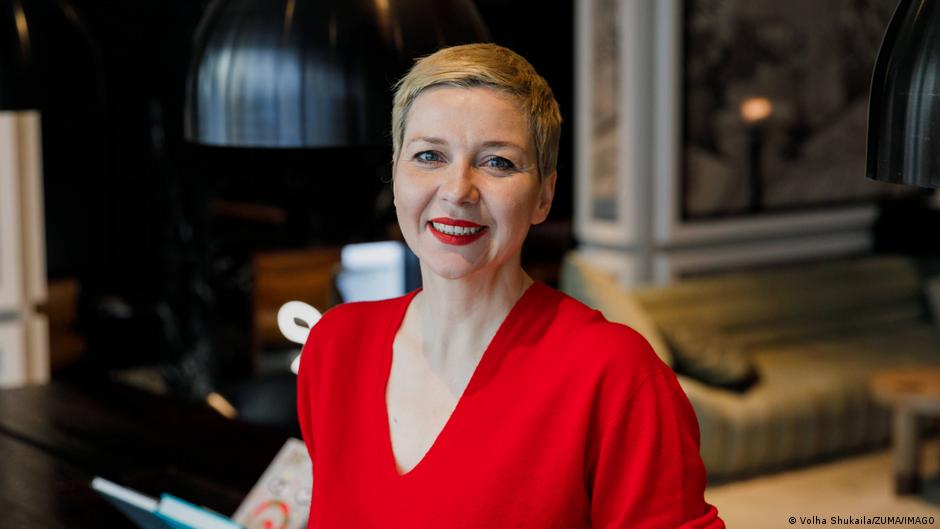
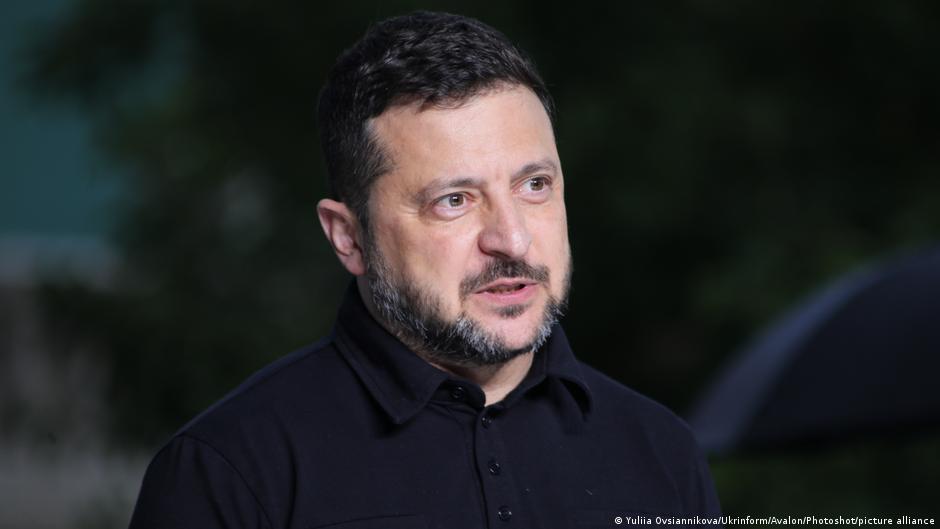
Belarusian activist and musician Maria Kolesnikova has urged the European Union to follow the United States in using diplomacy, alongside sanctions pressure, as a practical tool to secure the release of political prisoners in Belarus. Her appeal carries particular relevance for European governments and markets watching the security balance on the EU’s eastern flank, where Belarus remains closely tied to Russia and any shift in Minsk’s external relationships is assessed through a broader regional-risk lens.
In an interview with DW, Kolesnikova rejected suggestions that her calls for dialogue reflected a softer view of Alexander Lukashenko’s regime. She said years in prison had not changed her assessment of the political system in Belarus, but argued that diplomatic channels had proved capable of producing concrete humanitarian outcomes.
“We are talking here now precisely because diplomacy was used as an instrument of influence, as a tool for achieving certain goals,” Kolesnikova said.
For Britain and the European Union, the comments land at a moment when policy toward Belarus intersects with sanctions enforcement, energy and logistics security, and investor sensitivity to developments around Russia’s western perimeter. The source article did not report any immediate reaction in sterling or London-listed assets, but the direction of EU engagement with Minsk is closely relevant to London’s political-risk community because Belarus sits within the same security theatre that has shaped European defence spending, sanctions policy and market perceptions since Russia’s full-scale invasion of Ukraine.
Diplomacy, Sanctions and Political Prisoners
Kolesnikova said more than 800 people convicted under political articles remain in Belarusian prisons. She pointed to what she described as evidence that negotiations can work, referring to talks between Washington and Minsk that led to the release of around 500 political prisoners in exchange for an easing of sanctions on Belarusian companies.
Her argument is not that Europe should normalise relations with the Belarusian authorities, but that EU governments should use contact and leverage to save lives. She framed diplomacy as a mechanism for measurable results rather than a concession to the regime.
That distinction matters for European policymakers. The EU and the UK have both relied heavily on sanctions as a response to repression in Belarus and to Minsk’s alignment with Moscow. Kolesnikova’s intervention suggests that sanctions may be most effective when paired with targeted negotiation, particularly where prisoner releases can be secured without abandoning the wider pressure campaign.
For British businesses, the practical impact is indirect but significant. Belarus is not a central market for UK corporates, yet sanctions compliance, regional supply-chain risk and exposure to Eastern Europe all remain live issues for legal, financial and trading firms in London. Any change in the EU’s approach could affect how companies assess counterparty risk, cross-border payments and reputational exposure linked to Belarusian entities.
Reducing Russia’s Room for Influence
Kolesnikova also linked European openness toward Belarusian society to the wider architecture of European security. She said openness by Europe toward Belarus and Belarusians, rather than toward the regime, could reduce Russia’s sphere of influence in the country.
That message is likely to resonate in Warsaw, Brussels and London, where Belarus is viewed not only through the prism of human rights but also as a strategic buffer state. A Belarus less fully dependent on Moscow would be a material geopolitical development for the EU’s eastern border and for NATO members assessing long-term regional security.
Kolesnikova specifically mentioned recent talks between Polish Foreign Minister Radoslaw Sikorski and Belarusian Foreign Minister Maxim Ryzhenkov. The meeting took place in New York on the sidelines of the 81st session of the UN General Assembly. After the meeting, Sikorski said, among other things, that Warsaw was preparing to open a new building for its embassy in Minsk.
For the EU, Poland’s role is especially important because it shares a border with Belarus and has been among the bloc’s most vocal governments on the security implications of Minsk’s alignment with Moscow. Any Polish-Belarusian contact is therefore watched not merely as bilateral diplomacy, but as part of Europe’s broader attempt to manage risk along its eastern frontier.
The UK is outside the EU, but London’s interests are closely aligned with European security outcomes in Belarus. British foreign policy has supported pressure on authoritarian regimes and Russian-aligned actors, while the City of London remains a hub for interpreting the market consequences of sanctions, conflict risk and diplomatic de-escalation. A credible route to prisoner releases, if paired with continued pressure, would be relevant to both humanitarian policy and risk assessment.
Kolesnikova’s Own Case
Kolesnikova’s credibility in this debate is rooted in her own experience. She was arrested in September 2020 after opposition protests in Belarus. In a criminal case described in the source article as fabricated, a Minsk court sentenced her on September 6, 2021, to 11 years in prison.
She was released on December 13, 2025, together with Nobel Peace Prize laureate Ales Bialiatski and 121 other political prisoners. Their release followed negotiations between Belarusian ruler Alexander Lukashenko and a US delegation led by John Cole, the special envoy for Belarus.
Kolesnikova now argues that Europe should draw lessons from that outcome. Her position challenges EU leaders to consider whether carefully calibrated contact with Minsk can be used to extract humanitarian concessions while still denying political legitimacy to the Belarusian leadership.
For London and European investors, the immediate question is not whether Belarus becomes a commercial opportunity. It is whether diplomacy can lower one layer of political risk in a region where security shocks have repeatedly influenced currencies, commodities, defence equities and broader European sentiment. The source article offers no evidence of a sterling move tied to Kolesnikova’s remarks, but the policy debate she is pressing belongs squarely within the set of geopolitical factors monitored by UK and European markets.
Her central claim is that engagement with Belarusian society, combined with pressure on the regime, could both save prisoners and narrow Moscow’s influence. For Europe, that makes the issue more than a human-rights dispute. It is also a question of how the continent defines security, leverage and strategic patience on its eastern edge.