Lithuania Backs Property Curbs on Russians and Belarusians Near Strategic Sites
Vilnius says the proposed restrictions are aimed at reducing espionage and hybrid operations, with implications for Baltic security and EU investors.
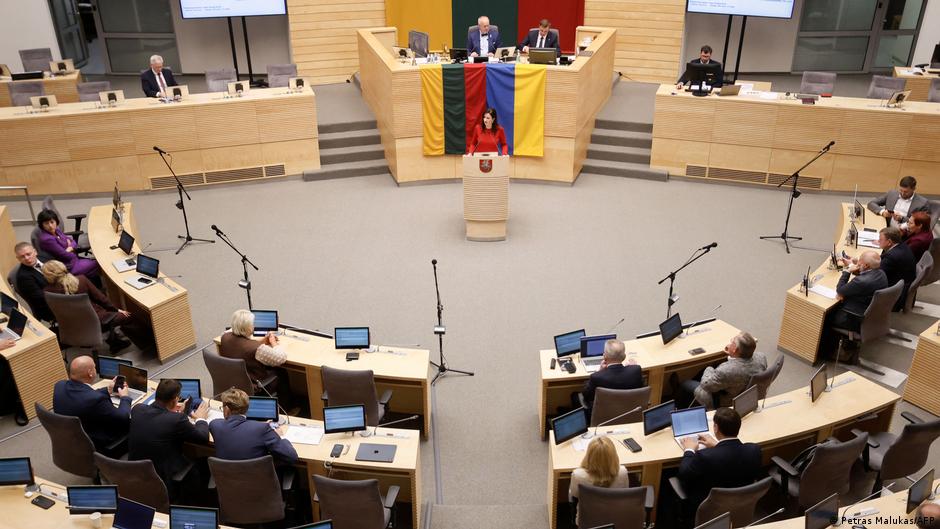
Lithuania's government has approved draft legislation that would bar citizens of Russia and Belarus, including those holding residence permits, from buying property near strategically important sites, a move likely to be watched closely by European policymakers, defence investors and London-listed companies with exposure to Baltic security and infrastructure.
The bill, reported on Wednesday, September 30, by Lithuanian National Radio and Television, known as LRT, would apply to areas close to facilities deemed strategically significant. The restriction would also cover people with valid temporary or permanent residence permits, although it would not apply where property rights are acquired through inheritance.
For UK and European business audiences, the proposal is another sign that the Baltic states are tightening rules around property, residency and national-security-sensitive assets as the war-driven security environment reshapes investment risk across the EU's eastern flank. While Lithuania is a small market, the policy direction matters for banks, insurers, infrastructure groups and real estate investors assessing compliance obligations, sanctions exposure and geopolitical risk in the region.
According to the draft, the ban is intended to significantly reduce intelligence activity and hybrid operations, including monitoring military exercises or tracking troop movements.
If approved by Lithuania's national parliament, the Seimas, the amendments would take effect on January 1, 2027. Latvia and Finland already have similar restrictions in force, while Estonia is still planning to introduce a comparable ban.
Security Rules Add to Baltic Investment Risk
The Lithuanian move fits a wider European pattern in which national security screening is extending beyond defence companies and technology suppliers into property ownership, residency rules and access to sensitive locations. For London market participants, the immediate sterling impact is likely to be limited, given Lithuania's scale and the euro-denominated nature of the Baltic economy. But the broader signal is relevant: EU governments continue to expand security-based restrictions that can affect capital flows, due diligence standards and cross-border transactions involving Russian and Belarusian nationals.
In practical terms, lenders and law firms serving international buyers may need to reassess beneficial ownership checks and location-based property risk if the Lithuanian bill becomes law. Real estate investors operating across the Baltics could also face a more fragmented regulatory map, with Latvia, Finland, Lithuania and potentially Estonia applying overlapping but not identical controls.
Data from Lithuania's Central Register for May of this year showed that 5,104 Russian citizens and 2,781 Belarusian citizens with temporary or indefinite residence permits had purchased property in Lithuania, including near strategically important facilities. The figures underline why Vilnius is focusing not only on new arrivals but also on residents already holding legal status in the country.
In June, the Seimas in neighbouring Latvia approved restrictions on the issuance of residence permits to Russian and Belarusian citizens. The Lithuanian proposal therefore adds to a regional tightening that may affect mobility, property rights and investment planning for individuals and companies connected to Russia or Belarus.
Sanctions Framework Extended
The property bill follows Lithuania's decision in late April to extend its sanctions law targeting Russian and Belarusian citizens until December 31, 2027. The Seimas approved that extension by 95 votes to six. The original law was adopted on May 3, 2023.
Under that sanctions regime, Lithuania has suspended the acceptance of applications from Russian and Belarusian citizens for Schengen and national visas. Russian citizens are also prohibited from acquiring real estate in Lithuania, bringing cash Ukrainian hryvnia into the country and applying for electronic resident status.
The rules also provide for the cancellation of temporary residence permits for Russian citizens if authorities establish that they have visited Russia or Belarus more than once during the previous three calendar months. Exceptions apply where the travel was caused by objective reasons or was connected with work in international transport.
For UK companies, the cumulative effect is a compliance environment in which residency documents alone may no longer be sufficient to establish low-risk status. London-based advisers, fund managers and corporate service providers dealing with Baltic assets may need to treat Lithuanian rules as part of a broader sanctions and security-screening matrix, rather than as a narrow real estate measure.
The measures may also feed into market perceptions of defence spending and security risk in north-eastern Europe. While no direct reaction in sterling or London equities was cited in the source report, investors typically monitor such steps as indicators of the policy climate around NATO's eastern border and the potential for further controls on sensitive assets.
Defence Posture Also Under Review
Lithuania is also considering a constitutional change linked to weapons of mass destruction. On September 22, members of the Seimas supported a proposal to abolish the constitutional ban on storing weapons of mass destruction, including nuclear weapons, on Lithuanian territory.
According to LRT, 99 lawmakers voted in favour of that decision, 13 voted against it and five abstained. To be adopted, the amendment must pass several rounds of voting. The first is scheduled for October 6, with the final vote set for January 12, 2027.
The constitutional debate comes as Lithuania continues to stress the importance of US and NATO presence in the region. Lithuanian President Gitanas Nauseda said on X that US troops due to replace American soldiers who had previously left Lithuania as part of a rotation were already on their way to the country.
Nauseda wrote that he had just received confirmation that a new contingent of US servicemen was heading to Lithuania, and thanked US President Donald Trump for the decision.
Taken together, the property restrictions, sanctions extension, residency controls and defence-related constitutional debate show Lithuania moving further toward a national security posture that treats legal residence, real estate ownership and military infrastructure as connected risks. For Britain and the EU, the development reinforces the Baltic region's role as a frontline test of how democratic states balance open markets with tighter security rules in response to Russia and Belarus.