New York mayor Mamdani unveils $29 million plan to fight antisemitism
The city strategy raises hate-crime funding, strengthens synagogue security and tests a mayor known for criticism of Israel.
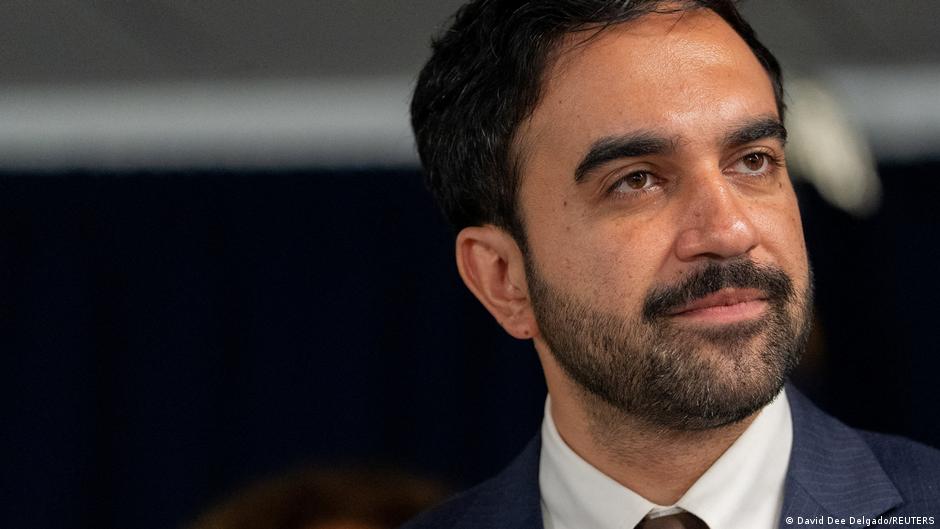
New York Mayor Zohran Mamdani has presented a broad municipal strategy to counter antisemitism and hate crimes targeting Jewish residents, setting out a sharp increase in city funding and new support for Jewish institutions at a politically sensitive moment for the administration.
The plan, announced on Tuesday, September 29, would raise the annual budget for combating hate crimes from $3 million to $29 million. City authorities also intend to allocate additional money for synagogue security and to restore a task force focused on the safety of Jewish houses of worship.
For UK and European observers, the initiative is less a question of direct market impact than of political risk management in one of the world’s largest financial centres. New York remains a key node for London-based banks, insurers, asset managers and professional-services groups, and policies affecting public safety, civic stability and minority protection are watched closely by companies with staff, clients and capital exposed to the city.
There was no market data in the announcement indicating an immediate sterling impact or a specific London trading response. Still, for British and EU businesses operating across the Atlantic, the plan lands in a wider environment where social tensions, security costs and political controversy can shape corporate confidence, staff mobility and institutional engagement.
A larger budget and a broader civic campaign
The strategy includes citywide public-information campaigns against antisemitism and an expansion of educational programmes about the Holocaust. Millions of dollars are also planned for Jewish cultural centres and nonprofit organisations, including a Holocaust memorial being created in Queens and a new Jewish culture centre in Brooklyn.
Mamdani framed the policy as a response to police data showing that antisemitic incidents make up a disproportionate share of hate crimes in the city.
“Although our Jewish neighbours make up only 12% of New York’s population, police statistics show that antisemitic crimes account for more than half of all recorded hate crimes. This is not only unacceptable, it is something we are obliged to change, and city authorities will take the lead,” Mamdani said in a video address posted on X.
The pledge to invest in synagogue security is likely to be read by Jewish institutions, schools and community organisations as one of the most concrete parts of the proposal. Security funding for places of worship has become an increasingly prominent issue across Western cities, including in Britain and the European Union, where Jewish communities have also reported concern over antisemitic abuse and threats.
For companies headquartered or listed in London but active in New York, the policy also matters through the lens of duty-of-care planning. Banks, law firms, consultancies and media groups routinely assess local security risks when moving employees between offices or holding public events. A city-backed framework for prevention, education and protection may therefore be relevant to institutional risk teams, even if it does not translate into an immediate price move on London markets.
Political context around Israel and Jewish voters
Mamdani is the first Muslim mayor of New York and is known for his pro-Palestinian position and criticism of Israel. Those views have caused unease among part of the city’s Jewish community. At the same time, Mamdani also has supporters among New York Jews, reflecting a politically divided local response rather than a single communal position.
The new strategy therefore carries significance beyond municipal budgeting. It is also an attempt by a mayor identified with criticism of Israel to demonstrate that his administration will treat antisemitic hate crime as a central public-safety issue. That distinction is likely to matter to international readers, including in the UK and EU, where debates over Israel, Gaza, antisemitism and free expression have had political consequences for parties, universities, businesses and public institutions.
Israeli Prime Minister Benjamin Netanyahu, speaking at the UN General Assembly in New York, called the mayor an antisemite. The accusation adds to the international profile of the dispute and underlines why the policy announcement will be watched not only by local community groups but also by foreign governments, investors and global institutions with a presence in the city.
During the 2026 election campaign, Mamdani said that if Netanyahu visited New York he would seek his arrest on the basis of a warrant issued by the International Criminal Court in 2024. After taking office as mayor, however, he acknowledged that he did not have the relevant authority to do so.
That sequence is important for European audiences because it touches on a legal and diplomatic question with direct relevance to the EU and the UK: the relationship between international criminal justice, national authority and local political office. Mamdani’s later acknowledgement that he lacked the power to carry out such an arrest narrows the practical implications, but the episode remains part of the political backdrop to his relationship with Jewish voters and Israeli officials.
For London’s financial community, the announcement is unlikely to be assessed as a conventional market event. It does not set tax policy, alter regulation or directly change cross-border capital flows. But the absence of an immediate sterling or equities signal does not make it irrelevant. The stability of New York’s civic institutions, the cost of security for community and cultural venues, and the tone of political leadership in a major global city all form part of the operating environment for British and European organisations.
The core facts of the plan are clear: a major increase in hate-crime funding, additional protection for synagogues, restored coordination on Jewish worship-site security, educational work on the Holocaust and support for Jewish cultural and nonprofit institutions. The harder test for Mamdani will be whether those measures can reassure critics who distrust his record on Israel while also delivering measurable improvements in public safety for Jewish New Yorkers.