Putin G20 Invitation Tests Ukraine Diplomacy as Europe Watches Markets
Germany says any Russian move toward a ceasefire would be the clearest signal of readiness for serious talks with Kyiv.
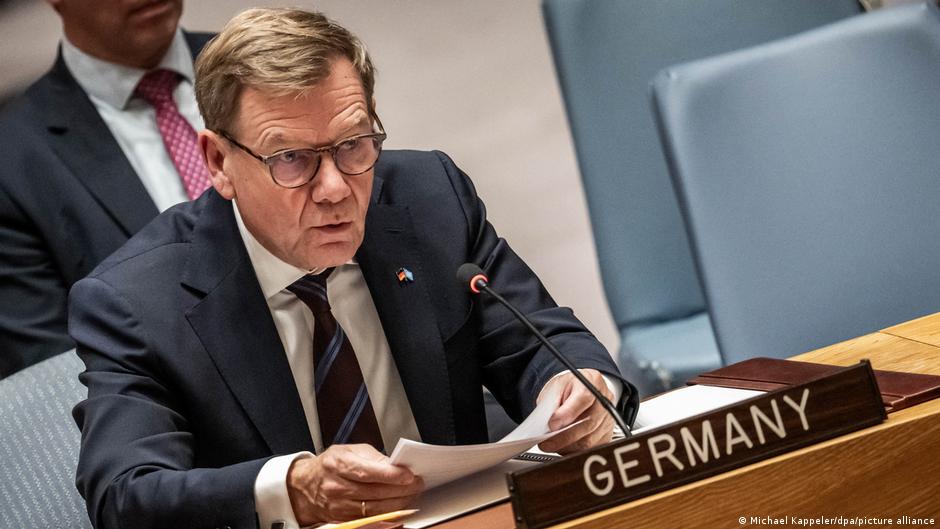
Germany’s foreign minister has said a possible appearance by Russian President Vladimir Putin at December’s G20 summit in Miami would serve as a “litmus test” of the Kremlin’s willingness to enter serious negotiations to end the war in Ukraine, a question being watched closely across European capitals and by investors in London.
Johann Wadephul made the remarks on Friday, September 25, during a meeting in Ottawa with Canadian Foreign Minister Anita Anand. He said Germany and other Western allies of Ukraine had repeatedly called on Russian authorities, and on Putin personally, to come to the negotiating table. In Wadephul’s view, the most meaningful signal of Russian readiness for substantive negotiations would be a ceasefire in Ukraine.
The comments place the proposed G20 invitation at the centre of a wider diplomatic calculation for the UK and the European Union. For London, the issue is not only whether Putin attends a US-hosted summit, but whether any such gathering could shift expectations around sanctions, energy security, defence spending and geopolitical risk, all of which feed into sterling sentiment and the tone of UK-listed markets.
European allies weigh diplomacy against isolation
Asked whether the G20 summit should be boycotted if Putin continues military operations, Wadephul stressed that Russian participation remained “very hypothetical” and urged observers to wait for developments over the coming weeks. His formulation leaves room for diplomacy while preserving the Western position that Russia must demonstrate concrete intent, not merely accept a seat at a high-profile international forum.
“Russia must negotiate — the sooner, the better,” Wadephul said.
Anand also said that Putin’s potential participation in the summit would not in itself be a reason for a boycott. She argued that diplomacy requires staying at the table and conducting difficult conversations. That stance reflects a broader debate among Ukraine’s partners: whether engagement at a summit risks normalising Moscow, or whether refusing to engage could close off a channel that might become useful if the Kremlin moves toward a ceasefire.
For European governments, the distinction matters. The UK and EU have backed Ukraine through sanctions, military support and financial assistance, while businesses have had to adapt to a prolonged security shock on Europe’s eastern flank. Any credible sign of a ceasefire process could affect perceptions of regional risk. But Western officials have also been careful not to confuse summit attendance with a change in policy from Moscow.
London focus turns to risk, sterling and sanctions
The London market reaction to Ukraine-related diplomacy is typically shaped by risk appetite, energy-price expectations and assumptions about future sanctions enforcement. The source remarks did not include any market data or currency moves, and no specific sterling movement was cited. Still, the diplomatic framing matters for UK investors because the war has influenced European inflation, energy security and defence policy since Russia’s full-scale invasion of Ukraine.
A genuine ceasefire signal could be read by markets as reducing one source of geopolitical uncertainty, potentially improving sentiment toward European assets. Conversely, an invitation that appears to elevate Putin without any battlefield pause or negotiating commitment could reinforce concerns about political division among Ukraine’s allies. For sterling, the key question would be whether investors see developments as lowering European risk or as increasing uncertainty over sanctions and alliance cohesion.
US Secretary of State Marco Rubio previously said the Kremlin leader had been invited to the G20 summit, which is scheduled to take place in December in Miami. Rubio said the visit would give Putin an opportunity to hold talks with US President Donald Trump and other heads of state and government. The Kremlin has not yet decided how to respond to the invitation.
The proposed invitation has already drawn criticism in Washington. According to The Washington Post, a bipartisan group of 14 US senators has urged Trump to withdraw it. In an appeal to the White House, Republican and Democratic senators said Putin bears sole responsibility for Russia’s launch of a full-scale war of aggression against Ukraine. They warned that allowing him to attend a G20 summit in the United States raises serious concerns about legitimising and normalising authorities that continue daily strikes on civilian targets in Ukraine.
The senators also noted that Putin and other members of the Russian delegation are under US sanctions for actions Washington regards as a threat to national security. They argued that if Putin is not isolated from the international community, he will have less motivation to end the war in Ukraine.
That argument resonates with many in Europe who see sanctions and diplomatic isolation as core instruments of pressure. Yet Wadephul’s remarks suggest Berlin is also looking for a practical test of Russian intent. If Moscow wants access to a global leaders’ summit, Germany’s foreign minister indicated, the signal should come not through rhetoric but through a ceasefire in Ukraine.
For the UK and EU, the coming weeks may therefore become a gauge of whether the G20 invitation remains a hypothetical diplomatic controversy or turns into a live test of Western unity. Until the Kremlin responds, and until there is evidence of a ceasefire, European policymakers and London markets are likely to treat the invitation as a political risk factor rather than a turning point.