Russia Opens Three-Day Duma Vote as Europe Weighs Sanctions and Market Risk
The election extends voting to occupied Ukrainian territories, sharpening legitimacy concerns for European governments and investors exposed to Russia risk.
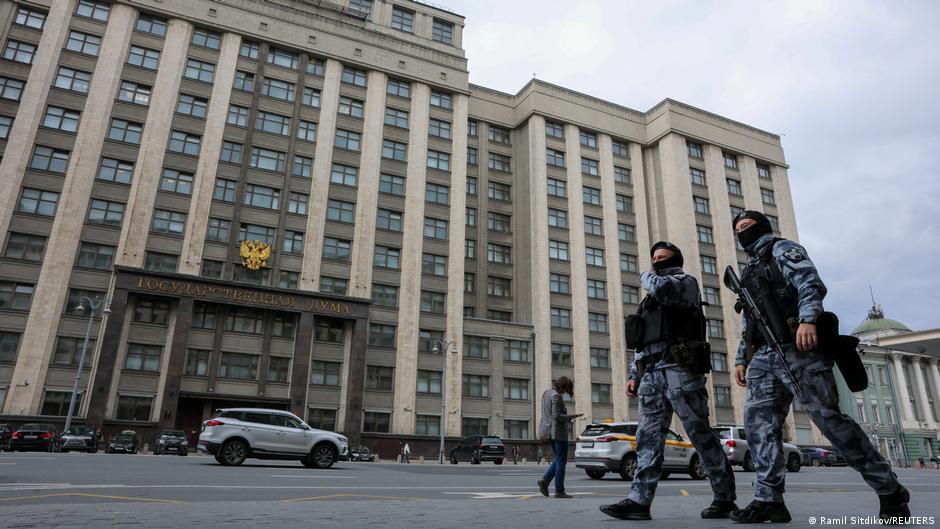
Russia formally opened three days of voting for the State Duma on Friday, September 18, with polling stations first operating in Kamchatka and Chukotka and the process scheduled to run until September 20. Regional polling stations are due to remain open until 20:00 local time, setting the stage for a vote watched closely in London, Brussels and other European capitals for its political and economic implications.
For British and European businesses, the vote is not a routine domestic event. It comes against the backdrop of Russia's continuing war in Ukraine, sanctions regimes that have reshaped trade and finance, and persistent questions over the legal and political status of occupied Ukrainian territories. The inclusion of those territories in the voting process is likely to reinforce concerns among Western policymakers and investors about the direction of Russian governance and the durability of Europe-Russia economic separation.
The new Duma will have 450 deputies. Half are expected to be elected in single-member constituencies, allowing voters to choose individual candidates. The remaining 225 seats will be allocated through party lists. Ten parties are listed for the party-list portion of the vote after the Yabloko party was removed from participation on formal grounds. Yabloko candidates, however, remain present among single-member contenders in several Russian regions.
Occupied Territories Add Legal and Investor Uncertainty
The previous Russian State Duma election was held in 2021. This time, voting has been expanded to occupied territories of Ukraine. Russian structures reported that participants in Moscow's full-scale invasion of Ukraine, as well as residents of Russian-occupied regions, voted early from late August through September 17.
Observers have said that even setting aside the issue of legitimacy in those territories, the way Russia's Central Election Commission organised voting there makes the results practically impossible to verify. Authorities did not publish information on members of regional election commissions or the addresses of polling stations. Open video monitoring was not organised at those sites, and mobile ballot boxes were permitted. The Central Election Commission also allowed local election commissions, if necessary, to print ballots on site and not immediately transfer them to higher-level bodies after counting.
Those details matter beyond Russia's borders. For the UK and EU, elections held in occupied Ukrainian territory are a direct challenge to the rules-based order on which European sanctions policy and investment screening increasingly rest. The process may add pressure for further diplomatic responses, and it is likely to keep Russia-related legal exposure high for companies, banks and insurers operating under British and EU compliance frameworks.
London markets have become less directly exposed to Russian assets since the 2022 invasion and subsequent sanctions, but the City still watches Russian political developments for their impact on energy risk, legal claims, commodities sentiment and sterling-sensitive inflation expectations. Any renewed escalation in sanctions rhetoric can feed through to energy price assumptions, European growth forecasts and risk appetite across UK-listed miners, banks and industrial groups with emerging-market exposure.
Observers say the organisation of voting in occupied territories makes the results practically impossible to verify.
AI Claims and Control of the Election Narrative
Ahead of the vote, pro-government Russian resources began circulating videos whose central message was that footage showing falsification or ballot stuffing at polling stations could be generated by artificial intelligence. Ella Pamfilova, chair of Russia's Central Election Commission, also said that such technologies could allegedly replace the live image from polling stations.
The emphasis on AI-generated fakes highlights another dimension of the election for European policymakers: information integrity. The UK and EU have both placed increasing attention on disinformation, cyber influence and the use of synthetic media in political contexts. Claims that compromising footage from polling stations could be fabricated may complicate scrutiny of alleged irregularities and further narrow the space for independent verification.
None of the ten parties represented in the 2026 State Duma election has condemned the ongoing war in Ukraine. Yabloko, which had consistently criticised the war, was initially admitted to the election but was later removed on formal grounds. The party was struck from the party lists, though individual members are running as candidates in single-member districts.
Some of those candidates later faced pressure and removal from the election on various grounds, often linked to old photographs and social media posts, including references to Alexei Navalny. Shortly before the election, opposition figures Yulia Navalnaya and Maxim Katz urged Russians to vote for the strongest single-member candidates who are not affiliated with United Russia. Yabloko criticised that idea and instead advised voters to spoil their ballots.
For European businesses, the immediate market response may be limited because Russia has already been heavily separated from Western capital markets. Yet the political signal remains material. A legislature formed without anti-war party representation, and with voting extended into occupied Ukrainian regions, may be read in London and Brussels as further evidence that normalisation is remote.
That has practical consequences. Sterling can be sensitive to shifts in European energy expectations, particularly if geopolitical tensions revive concerns over gas prices, inflation and Bank of England policy. UK companies with compliance obligations under sanctions law will also be watching for any post-election response from British, EU or allied authorities. Even without direct exposure to Russia, firms may face tighter due diligence expectations for counterparties, logistics chains and financial flows linked to high-risk jurisdictions.
The Duma vote therefore carries weight well beyond its formal domestic function. It is a political event embedded in a wider European economic equation: sanctions, war risk, energy security, information credibility and the long-term closure of Russia as an investable market for most mainstream UK and EU institutions.