Russia to Shut Goethe Institutes After Berlin Ends Russian House Deal
Moscow says all three German cultural branches in Russia will close after Berlin moved to terminate the agreement covering the Russian House in Berlin.
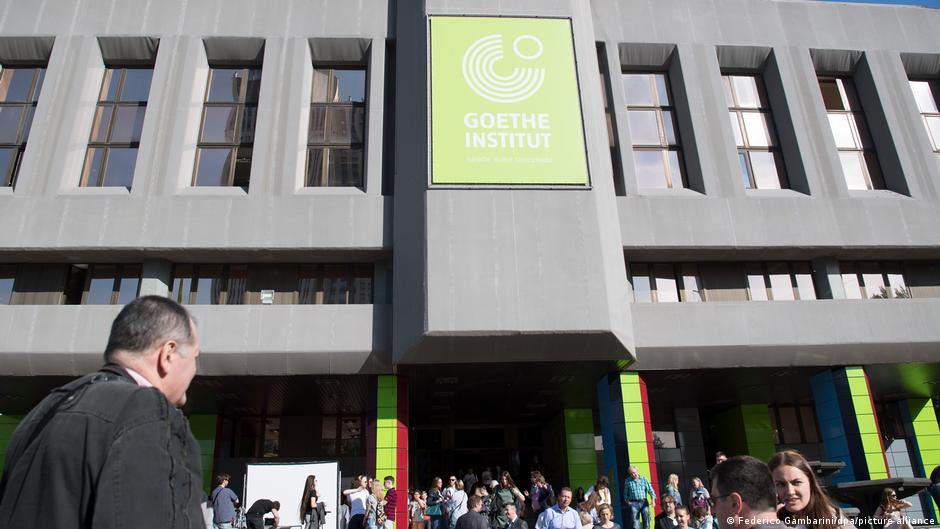
Russia will close all three branches of Germany’s Goethe-Institut in the country, Foreign Minister Sergei Lavrov said on Thursday, September 3, after German authorities decided to terminate the agreement governing the Russian House in Berlin.
The announcement adds a fresh layer of political and cultural friction to already strained relations between Moscow and Berlin, with potential implications for European business sentiment as governments tighten restrictions and corporate planners reassess exposure to a more confrontational operating environment. For British and EU investors, the latest dispute underscores how geopolitical decisions are continuing to spill into cultural and institutional links that had survived earlier rounds of tension.
Speaking at the Eastern Economic Forum in Vladivostok, Lavrov said Germany’s cultural presence in Russia would now be wound down in response to Berlin’s decision. His remarks were broadcast on the Russian foreign ministry’s YouTube channel.
“Of course, they will be closed, after our cultural center was thrown out from there. Otherwise we would not respect ourselves,” Lavrov said.
Lavrov said the Germans had Goethe-Institut branches “in Moscow, in St. Petersburg and in Yekaterinburg.” However, according to the institute’s own information, its third branch in Russia is located not in Yekaterinburg but in Novosibirsk.
He also said German authorities had “consciously” taken a step that “clearly means the end of their cultural presence in the Russian Federation,” which he said had remained in place despite what he described as the “Ukrainian vicissitudes” in Russia’s relations with the West.
DW requested comment from the Goethe-Institut’s leadership.
Sanctions escalation deepens bilateral split
Lavrov’s comments came a day after German authorities announced tougher sanctions against Russia, blaming Moscow for a drone incident at Leipzig airport in August. German officials said the decision followed an examination of the drones’ settings and certain components that had been used in other hybrid incidents.
German Interior Minister Alexander Dobrindt said those findings led Berlin to conclude that Russia was responsible. The episode has pushed the German government toward a broader retaliatory package that reaches beyond transport security and into diplomatic and cultural arrangements.
As part of those countermeasures, the German government ordered the closure by September 18 of the last remaining Russian consulate general in the country, located in Bonn, and said it would terminate the agreement governing the activities of the Russian House in Berlin. German Foreign Minister Johann Wadephul announced those steps.
The same agreement also regulated the operation of the Goethe-Institut in Russia, making the cultural institutions on both sides directly vulnerable once Berlin moved to end the arrangement. Germany also said it would tighten checks on Russian citizens entering the country and strengthen measures against Russia’s “shadow fleet.”
For European companies, the importance of the latest exchange lies less in the immediate commercial footprint of the Goethe-Institut and more in the signal it sends about the breadth of the diplomatic rupture. A framework that once allowed cultural and educational engagement to continue despite wider disputes is now being dismantled. That increases the perception that channels previously considered politically insulated can no longer be treated as stable.
In London and other European financial centers, the development is likely to be read as another marker of hardening policy risk across the region’s Russia relationship. No immediate market move or sterling reaction was cited in the statements from Moscow or Berlin, but UK-based investors and businesses with European exposure will be watching whether the dispute feeds into broader concerns over sanctions enforcement, logistics security and state-to-state retaliation.
Sterling-sensitive sectors, particularly those exposed to continental sentiment, transport risk or compliance costs, may view the episode as part of a wider pattern rather than a standalone cultural dispute. Germany’s reference to hybrid incidents and its move against Russia’s shadow fleet are especially relevant for European shipping, insurance, trade finance and security-related businesses that track escalation not just for headline value but for its operational impact.
For Britain, which often calibrates its Russia policy closely with European partners while maintaining its own sanctions architecture, the case is also notable because it shows Berlin broadening its toolkit. Measures that combine sanctions, entry controls, diplomatic closures and cultural restrictions point to a more comprehensive response model that other European capitals and market participants will study carefully.
At the same time, the exchange highlights how retaliation is becoming increasingly reciprocal. Germany moved to end the Russian House agreement, and Moscow responded by saying Germany’s Goethe-Institut branches in Russia would be shut. That tit-for-tat structure may not directly alter trade flows on its own, but it reinforces a climate in which institutional ties can be revoked quickly once political thresholds are crossed.
The result is a further narrowing of the space for low-conflict engagement between Russia and Europe. For policymakers, the dispute is about accountability after the Leipzig airport drone incident and the boundaries of acceptable state behavior. For businesses and investors in the UK and EU, it is another reminder that the political risk premium around Russia-related exposure remains high, and that even cultural arrangements can become part of the sanctions and retaliation cycle.
Whether the latest measures lead to further steps from either side will now be closely watched across European capitals. What is already clear is that Berlin’s decision has triggered a direct Russian response, and that one of the last remaining areas of German cultural presence in Russia is set to disappear.