Russian Drone Strikes Hit Ukraine’s Odesa and Zaporizhzhia Regions
The overnight attacks killed at least three civilians in Zaporizhzhia and hit port and civilian infrastructure in Odesa region.
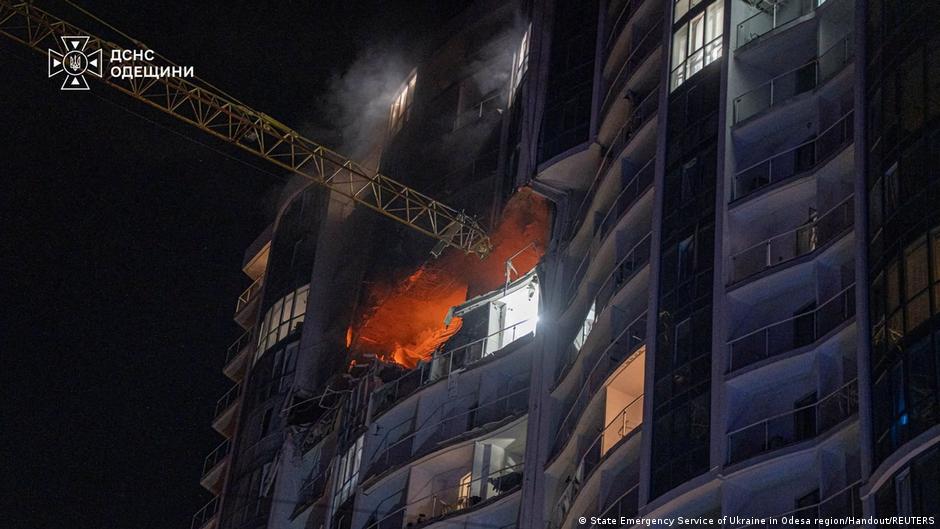
Russian attack drones struck Ukraine’s Odesa and Zaporizhzhia regions overnight into Sunday, September 27, killing at least three civilians and injuring four others in Zaporizhzhia region, according to preliminary information from Ukrainian authorities.
The attacks, reported by regional officials, again put pressure on areas that matter not only to Ukraine’s security but also to European commercial interests. Odesa region’s ports and Danube-linked infrastructure remain closely watched by British and EU businesses because disruption there can affect trade flows, insurance pricing, freight planning and sentiment around the broader Black Sea corridor.
In Zaporizhzhia region, acting head of the regional military administration Mykhailo Semikin said Russian forces struck the settlement of Kamyshevakha and the village of Novotavriiske. According to preliminary data cited by the authorities, three civilians were killed and four others were wounded.
Russian forces struck Kamyshevakha and Novotavriiske, where preliminary reports said three civilians were killed and four were injured.
Officials said one of the attacks in Novotavriiske targeted a car travelling through the village. Semikin said the vehicle caught fire after being hit, and that a man and a woman died at the scene. In Kamyshevakha, one house was destroyed and several neighbouring homes were damaged, according to the authorities.
Port Infrastructure Draws European Attention
Russia also struck port and civilian infrastructure in the city of Kiliia in Odesa region, the Izmail district administration reported. Preliminary information indicated that no one was injured there. A fire that broke out at the strike site was extinguished by emergency services.
For UK and European markets, the Odesa region is a recurring point of concern because attacks on port and civilian infrastructure can feed into wider risk assessments for shipping, grain handling and regional logistics. The source report did not specify the scale of damage in Kiliia, and officials gave no immediate estimate of the commercial impact. Still, even attacks that cause no casualties can heighten operational uncertainty for companies exposed to Black Sea and Danube trade routes.
London investors have repeatedly treated developments in Ukraine as part of a broader European risk backdrop, particularly when infrastructure linked to transport and exports is hit. Any sustained concern about disruption can be relevant for firms in shipping, commodities, insurance and food supply chains. The pound’s direction is usually driven by domestic UK rates, inflation expectations and Bank of England signals, but conflict-related pressure in Europe can still influence sterling through risk appetite and demand for perceived safer assets.
The latest reports from Ukrainian regional authorities did not include financial market data, movements in sterling or direct comments from London-listed companies. They also did not provide details on the number of drones launched, how many were intercepted, or whether additional settlements were affected beyond those named.
The Zaporizhzhia fatalities underline the continuing civilian toll of Russia’s drone attacks away from the immediate front line. The reported strike on a moving car in Novotavriiske, followed by a fire that killed two people at the scene, points to the danger faced by residents carrying out ordinary movements within settlements exposed to aerial attacks.
In Kamyshevakha, the destruction of a home and damage to nearby houses added to the material losses recorded by local authorities. The four reported injuries in the region were described as preliminary figures, leaving open the possibility of updates from officials as emergency services and regional administrators complete assessments.
In Odesa region, the absence of reported casualties in Kiliia will be watched alongside the condition of the affected port and civilian infrastructure. Emergency crews extinguished the fire at the impact site, according to the Izmail district administration, but the initial statement did not say how quickly normal operations could resume or whether any facilities remained out of service.
The attacks came overnight into Sunday, September 27, extending the pattern of Russian drone strikes against Ukrainian civilian areas and infrastructure. For European policymakers and businesses, the combination of civilian casualties in Zaporizhzhia and strikes on Odesa-region infrastructure reinforces the conflict’s dual impact: immediate human harm inside Ukraine and continuing uncertainty for trade routes that connect the country to wider European markets.