Russian-Flagged Ship Register Expands 36% as Shadow Fleet Pressure Builds
CREA says sanctions pressure on open registries is forcing Moscow-linked tankers toward the Russian flag, sharpening risks for Europe and UK maritime markets.
Russia’s ship register has expanded sharply as diplomatic and sanctions pressure closes off options for vessels linked to Moscow’s so-called shadow fleet, according to an analysis by the Centre for Research on Energy and Clean Air published on Friday, September 25.
From January 2025 to June 2026, the number of ships sailing under the Russian flag rose by 36%, the analysis found. Over that period, 107 vessels were added to the register, with the steepest monthly increase coming in December 2025, when 25 new entries were recorded.
For the UK and European shipping, insurance and commodities sectors, the findings point to a hardening contest over enforcement. As open registries withdraw services from sanctioned vessels, shipowners and operators involved in Russian energy flows are being pushed toward a narrower set of choices: accept the risks of operating under false or unrecognised flags, or move formally into the Russian registry.
Pressure on Open Registries Narrows the Fleet’s Options
CREA said the figures reflect a shift in the policy of open registries, which have increasingly stopped allowing sanctioned cargo to be transported on shadow fleet vessels. Barbados and Palau have fully cleared their registers of sanctioned ships, while Panama has cut the number of such vessels by nearly two-thirds from its peak in May 2025.
The world’s largest ship registries have also launched a shared database, known as RISC, aimed at countering reflagging and other methods used to bypass restrictions. That matters for London because the UK remains a key centre for maritime services, including insurance, legal work, brokerage and sanctions compliance. Any acceleration in reflagging under Russia raises questions for firms exposed to shipping documentation, vessel screening and cargo due diligence.
By June, 46 ships that had previously sailed under the flags of the Comoros or The Gambia had been registered in Russia, CREA said. Other vessels moved to the flags of Sierra Leone and Equatorial Guinea, while some continued operating without a recognised flag.
Of the 107 vessels added to the Russian register, 93 had previously been under sanctions, and 90 were subject to restrictions by more than one jurisdiction. CREA also found that ships which carried Russian oil before the first sanctions changed flags three times more often than they had before. Sixteen of those vessels also transported Iranian or Venezuelan oil.
Energy Flows Continue Despite Reflagging
After switching to the Russian flag, the vessels continued carrying Russian fuel around the world. CREA said oil worth €5.2 billion was shipped mainly to China. Ship-to-ship transfer schemes in Egypt and the Red Sea were also used.
Those flows remain significant for Europe even where the cargo is not bound for EU ports. The shadow fleet has become a central concern for governments seeking to limit Moscow’s energy revenues while avoiding a disorderly shock to global supply. For the UK, the issue also intersects with sterling through the wider energy-price channel: disruptions, enforcement shocks or maritime incidents can feed into fuel costs, inflation expectations and risk appetite across London markets.
The report’s findings arrive as European policymakers continue to weigh the effectiveness of sanctions against the practical challenges of maritime enforcement. A Russian flag may make some vessels easier to identify politically, but it can also reduce the leverage of open registries and complicate the response when safety or environmental risks emerge near European waters.
Arctic Metagaz Incident Highlights Coastal-State Risk
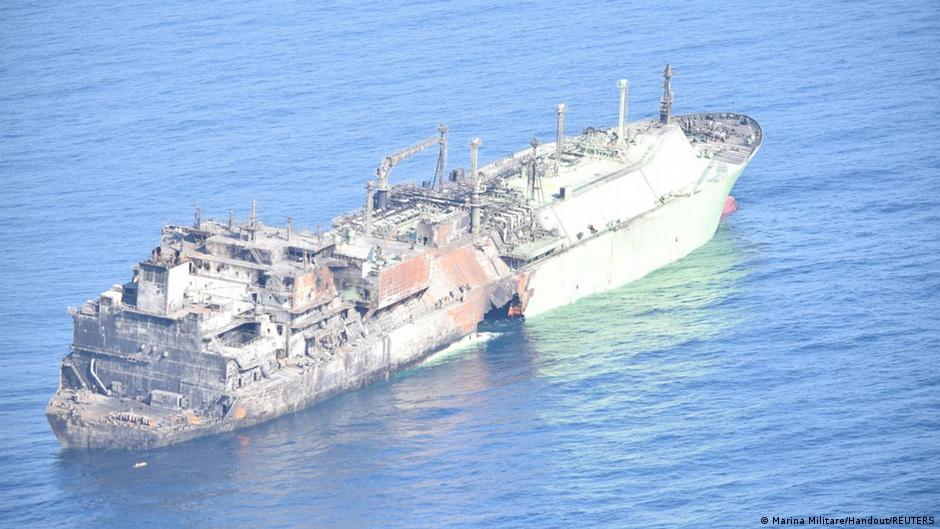
CREA pointed to the case of Arctic Metagaz, a Russian liquefied natural gas carrier that caught fire in the Mediterranean in March. Libya, Malta and Italy were forced to handle the crisis on their own, underscoring the burden that incidents involving sanctioned vessels can place on coastal states.
“The Arctic Metagaz incident showed the Russian flag for what it really is: a shield for dangerous vessels, providing no support in the event of a disaster and leaving coastal states with the task of managing risks and dealing with the consequences,” analyst Luke Wickenden said.
Arctic Metagaz is one of around ten gas carriers used to transport sanctioned LNG from Russia’s Arctic LNG 2 terminal to the port of Beihai on China’s southern coast. In February 2026, the vessel left Murmansk after loading and was probably heading toward the Egyptian port of Suez, according to gCaptain. The ship has been under US and UK sanctions since 2024.
For London’s market participants, the immediate issue is not a single vessel but the direction of travel. A larger Russian-flagged register could mean more opaque risk around cargoes, counterparties and routes tied to sanctioned oil and LNG. It also increases the importance of screening systems used by insurers, banks, commodity traders and shipbrokers operating under UK and EU sanctions rules.
The CREA analysis suggests that pressure on registries is having an effect, but not necessarily by removing vessels from trade. Instead, it is changing the legal and operational wrappers around the fleet. That leaves Britain and the European Union with a familiar enforcement dilemma: tighter restrictions can push activity into less transparent channels, while maritime accidents can leave nearby states carrying the practical costs.