Schroeder’s Globus Russia Role Draws German Backlash and EU Business Scrutiny
The former German chancellor’s post at Hyperglobus has renewed questions in Europe over corporate exposure to Russia and political access.
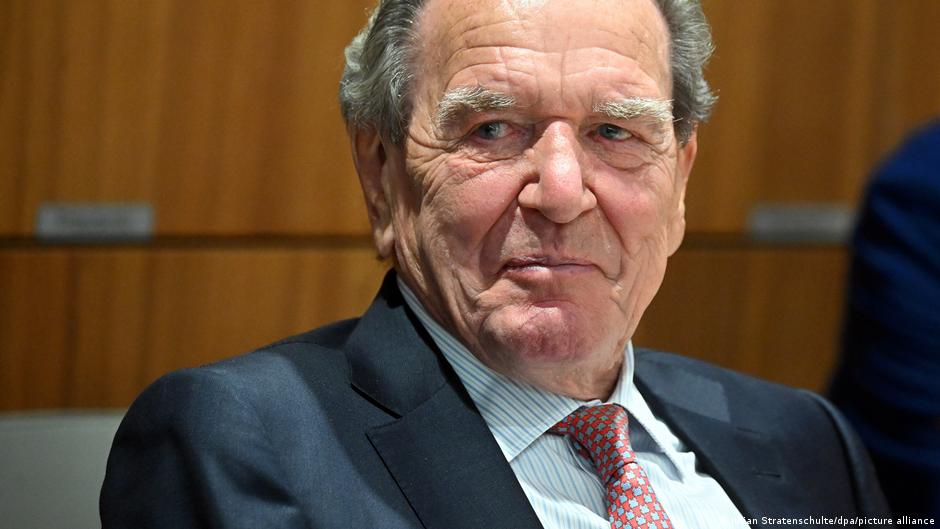
Gerhard Schroeder’s appointment to a senior role at Hyperglobus, the Russian operator formerly linked to Germany’s Globus hypermarket chain, has drawn sharp criticism from German politicians and economists and is likely to be watched closely by UK and European businesses still managing Russia-related risk.
The former German chancellor has become a member of the supervisory board of Hyperglobus, the company that operates the Globus hypermarket network in Russia. The move was confirmed by the company’s press office on October 2, which said Schroeder would help oversee the retailer’s “strategic development”.
For European investors, retailers and lenders, the appointment highlights a continuing dilemma: even where Russian operations have been made legally separate, ownership history, political relationships and the threat of state intervention remain central to how such assets are perceived. In London, where investors routinely price geopolitical risk into European equities, the case adds another example of the reputational and governance complications surrounding companies with Russian exposure.
German Critics Call the Post a Lobbying Role
Roderich Kiesewetter, a Bundestag member and foreign policy expert for Germany’s governing Christian Democratic Union, commented on the news on Saturday evening, October 3. He described Schroeder’s new position as a “betrayal of Europe and of his own country”.
“Anyone who publicly and demonstratively shakes Schroeder’s hand thereby wants to demonstrate their position,” Kiesewetter wrote on X.
Thomas Jaeger, a professor of political science at the University of Cologne, also criticised the move, framing it as another assignment linked to Russian interests. “Schroeder has a new lobbying commission. In Russia. Where else?” he wrote on X. Jaeger also asked whether German President Frank-Walter Steinmeier knew about it when, several days earlier, he greeted Schroeder.
The handshake referenced by Kiesewetter and Jaeger appeared to concern the ceremony marking the 75th anniversary of Germany’s Federal Constitutional Court, held on September 28 in Karlsruhe. Steinmeier attended the event and, upon entering the hall, shook hands with Schroeder, who was seated in the front row as an honorary guest.
Jan Schnellenbach, a German economist and professor of microeconomics at Brandenburg University of Technology in Cottbus, accused the former chancellor of “shamelessness”. He referred to previous claims that Schroeder was too ill to appear before a German court and asked on X whether “Russian money” had healing powers.
European Corporate Risk Comes Back Into Focus
The case is not only a German political controversy. For British and EU companies, it is another reminder that Russian-linked assets remain exposed to political decisions, public scrutiny and potential reputational costs. Since Russia’s full-scale war in Ukraine began, European groups have faced pressure from shareholders, governments and civil society to clarify whether they are exiting Russia, ring-fencing assets or continuing operations through local structures.
Janis Kluge, a German economist and head of a research division at the Berlin-based German Institute for International and Security Affairs, argued that Schroeder’s arrival in Hyperglobus management amounted to the firm buying itself “lifetime insurance” against the fate of German retailer Metro. Metro’s Russian assets were previously placed under temporary management by decree of Vladimir Putin.
Kluge wrote on X that Schroeder was again monetising his access to Putin. That assessment will resonate beyond Berlin, particularly among businesses and investors assessing whether personal political connections can alter the risk profile of assets in Russia.
Schroeder has long been viewed by many observers in Germany as a lobbyist for Russian enterprises. He previously held senior roles at Rosneft and at the operating company behind Nord Stream. His new position therefore revives scrutiny of the relationship between former European leaders, Russian business interests and the governance structures that surround assets operating inside Russia.
Sterling and London Market Implications
The source material does not cite any direct movement in sterling or any immediate reaction from London-listed shares. Still, the episode lands in a market environment where UK investors remain sensitive to Russia-related headlines, especially when they touch on European retail, energy, sanctions risk or the treatment of foreign assets.
For sterling, the direct effect of a single German retail governance dispute is likely to be limited unless it feeds into a broader deterioration in European political risk sentiment. Currency markets typically respond more strongly to interest-rate expectations, growth data and fiscal signals. But for London desks, the relevance lies in the wider question of how Europe’s remaining corporate links to Russia are managed and whether governments may face renewed pressure to tighten oversight.
That matters for British companies with EU supply chains, banks with continental exposure, and funds holding European consumer or retail names. If investors conclude that legally separated Russian businesses still carry political liabilities for parent groups or shared shareholders, valuation discounts and governance questions may persist.
Globus Gruppe has said that, as of January 1, 2025, the Russian business of the Globus network is “legally and organisationally independent”. Isabel del Alcazar von Buchwald, a spokesperson for Globus Gruppe, provided that clarification. At the same time, the shareholders of Russia’s Hyperglobus are the same German businesspeople as those behind the rest of the group.
That distinction is likely to be central to how the case is read in European business circles. Formal separation may reduce operational linkage, but it does not automatically remove reputational exposure, particularly when a prominent former German chancellor with a record of Russian corporate roles joins the Russian entity’s supervisory structure.
For Daily Edge readers following UK and European markets, the significance is less about one retail appointment than about the continuing financial afterlife of Europe’s pre-war Russia ties. Schroeder’s role at Hyperglobus underlines how old relationships, shareholder structures and political access can still shape the perceived risk of doing business connected to Russia, even when companies say those businesses now stand apart.