Trump-Putin Call on Russia Health Scare Puts Europe on Alert
Reports of a possible plague-linked death in Siberia have drawn WHO scrutiny as UK and EU investors monitor geopolitical and market risks.
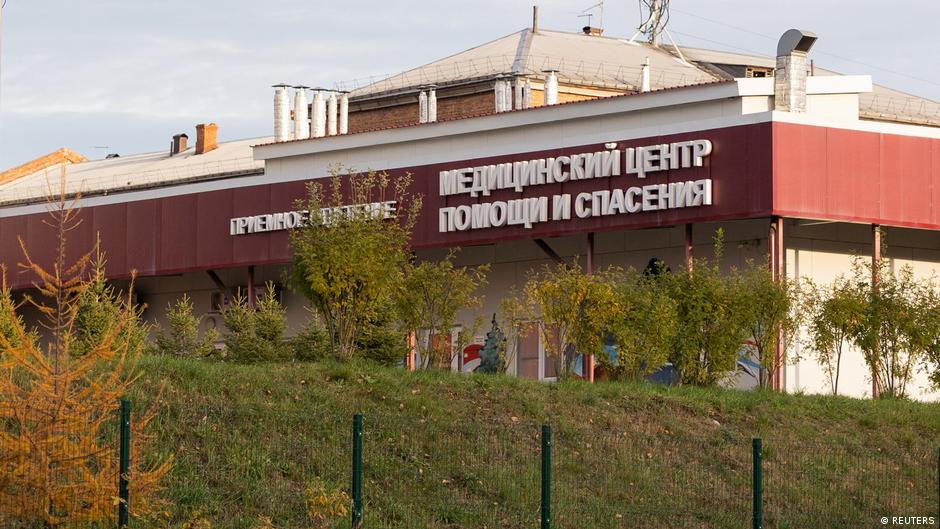
U.S. President Donald Trump is preparing to speak by telephone with Russian President Vladimir Putin following reports of a possible death from plague at a specialist anti-plague institute in Siberia, a development that has added a fresh public-health variable to an already sensitive geopolitical backdrop for Britain and Europe.
The planned call comes after the death of 28-year-old laboratory assistant Darya Shipilova, who worked at the Irkutsk Anti-Plague Institute. She died overnight on 2 October at the Shelekhov district hospital in Russia's Irkutsk region. Russian officials have not confirmed plague as the cause of death, and federal consumer health watchdog Rospotrebnadzor has said she was diagnosed with pneumonia of unknown cause.
Trump told reporters on Tuesday, 6 October, that a conversation with Putin had been scheduled when asked whether he had discussed the Irkutsk incident with the Russian leader. Two days earlier, on 5 October, Trump said the United States was watching events in Russia “very closely” and suggested Washington would be ready to assist Moscow. He said Russian authorities were calling the matter pneumonia, while adding that microbes and bacteria had become “disproportionately stronger.”
WHO Seeks Clarification From Moscow
The World Health Organization has said it is in contact with Russian health authorities and has offered technical support. WHO Director-General Tedros Adhanom Ghebreyesus wrote overnight on 7 October that Russian authorities had informed the organisation that no plague cases had recently been registered in the Irkutsk region.
Russian health authorities told the WHO that an epidemiological investigation had been carried out, preventive and control measures had been taken, and identified contacts had been placed under medical observation and tested.
According to Tedros, Russian officials also said that no high-threat pathogens had been detected among contacts and that medical observation of all identified contacts had been completed. At the same time, the WHO has requested further information to clarify the cause of the severe pneumonia, the pathogen that prompted public-health measures, and media reports of a second employee with pneumonia of unknown origin.
For European officials and businesses, the immediate question is less whether there is a confirmed cross-border health threat than whether Russia's handling of the incident introduces another layer of uncertainty. The UK and EU have lived through recent years in which public-health scares, supply-chain fragility and sanctions politics have repeatedly intersected. Any sign of opacity around a potential high-risk pathogen in Russia is therefore likely to be watched closely in London, Brussels and European capitals.
London Watches Risk Sentiment and Sterling
For the City of London, the Irkutsk reports arrive at a moment when investors are already highly sensitive to geopolitical news from Russia. A Trump-Putin call would normally be assessed through the lens of Ukraine, energy security and sanctions. This time, the public-health element may also influence short-term risk appetite, particularly if the WHO says it still lacks key information from Moscow.
Sterling's reaction will depend on whether the story remains a contained Russian health investigation or broadens into a wider international concern. The pound can come under pressure when global investors move toward the U.S. dollar during periods of uncertainty, while UK equities with exposure to travel, commodities, insurance and emerging markets may be more sensitive to headlines suggesting public-health disruption. No market-moving figures have yet been reported in the source material, and the available facts do not establish a confirmed plague outbreak.
European companies will also be attentive to any operational implications. The Irkutsk region is far from the main EU commercial centres, but Russia remains connected to global commodity markets, transport corridors and industrial supply chains. The source reports that the Irkutsk aluminium plant, IrkAZ, in Shelekhov introduced a mask regime, according to plant director Artyom Fominykh. Such local measures do not by themselves indicate a broader economic disruption, but they will be scrutinised by traders because aluminium and energy-linked industries are already politically and commercially sensitive in Europe.
There have also been reports of quarantine measures at medical facilities in Irkutsk. The publication People of Baikal reported on 4 October that Irkutsk city clinical hospitals No. 1, 3 and 10, as well as a maternity hospital and the Ivano-Matreninskaya children's clinical hospital, had been closed for quarantine. Those reports have helped drive international attention even as Russian authorities publicly emphasise pneumonia of unknown cause rather than a confirmed plague diagnosis.
The uncertainty has been compounded by statements from regional officials. Alexey Tsydenov, the head of neighbouring Buryatia, wrote on Max that Shipilova's cause of death was plague, but later edited the post to add the word “possibly.” Irkutsk governor Igor Kobzev has referred to suspicion of a “particularly dangerous infection” without naming a presumed diagnosis.
For UK and EU policymakers, the episode is a reminder that health surveillance is now part of economic risk management. The WHO's request for more information matters not only for medical clarification but also for market confidence. Investors tend to discount uncertainty when institutions can verify facts quickly; they become more cautious when official accounts, regional statements and media reports diverge.
The next signal will be whether the expected Trump-Putin conversation produces any substantive statement on health cooperation or whether it remains a diplomatic acknowledgement of concern. Until Russian authorities provide further detail to the WHO, European governments and markets are likely to treat the Irkutsk case as a contained but unresolved risk, with implications for sterling sentiment tied mainly to any escalation in global risk aversion.