Trump Says US-Iran Talks Were Productive After Threatening Tehran at UN
The mediated meeting in New York drew British and European attention because any shift over Hormuz could affect energy costs, sterling and London markets.
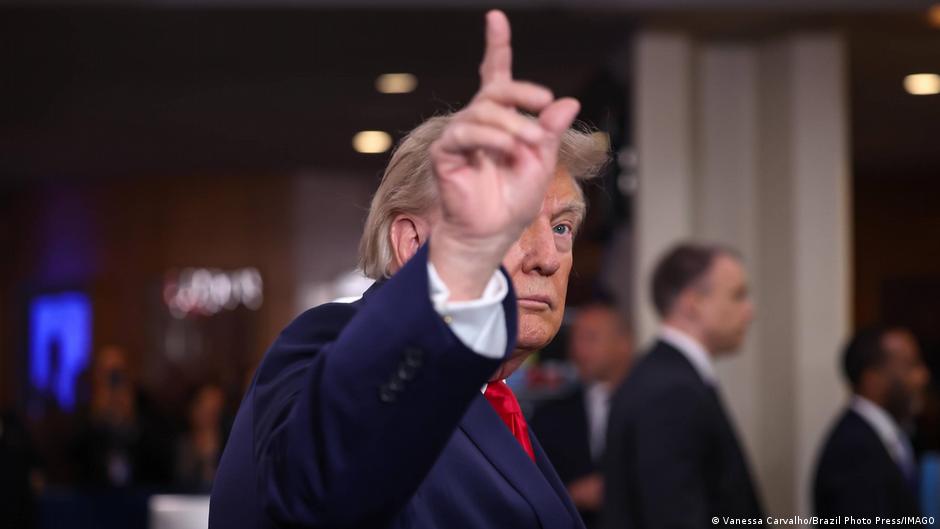
Donald Trump said US and Iranian officials held a “very productive” meeting on the sidelines of the 81st session of the UN General Assembly in New York on Tuesday, September 22, marking the first such encounter in several months. The talks, conducted through intermediaries, lasted about three hours, according to the US president.
The meeting came only hours after Trump used an address to world leaders at the UN to issue a stark threat against the Islamic Republic, saying he faced a major choice between reaching an agreement that would allow Iran to recover and become a much more powerful state, or destroying it quickly so that it would never again have the chance to kill people and destroy countries.
For Britain and Europe, the talks carried significance well beyond Washington and Tehran. Any movement around Iran, sanctions and the Strait of Hormuz is closely watched by energy traders, shipping insurers and investors in London, where concerns over oil supply and geopolitical risk can quickly feed into inflation expectations, sterling sentiment and broader market positioning.
Qatar and Pakistan mediated the encounter
Trump said US and Iranian officials met in New York on the sidelines of the General Assembly for the first time in months. On the American side, the talks involved Trump’s special envoys Steve Witkoff and Jared Kushner. Iran was represented by Foreign Minister Abbas Araghchi. The meeting was mediated by Qatar and Pakistan, according to The New York Times.
Witkoff later wrote on X that the parties had held extensive talks with the Iranian delegation on the margins of the UN General Assembly, with representatives shuttling between the sides throughout the day. He said a round of discussions had been successfully completed and that the mediators would continue their work.
“We hope it will prove constructive and forward-looking,” Witkoff said of the completed round of discussions.
During a separate meeting with leaders from Gulf countries on the sidelines of the UN gathering, Trump said there was “great momentum” toward reaching an agreement with Iran, AFP reported. The remark contrasted sharply with the threatening language he had used earlier in the day before heads of state and government at the United Nations.
According to Iranian state media, Tehran used the talks to inform Washington of its conditions for the resumption of shipping through the Strait of Hormuz. Those conditions included an immediate end to the US maritime blockade, the unfreezing of all Iranian assets frozen under sanctions, and a halt to all military action.
Hormuz risk keeps London focused
The Strait of Hormuz is a key artery for global energy shipments, and any disruption there is followed closely in European capitals. Although the source account did not report specific price moves in London, the substance of the talks is directly relevant to UK and EU businesses exposed to fuel costs, shipping rates, insurance premiums and currency volatility.
For the UK, the pressure point is not only energy supply but also inflation. A renewed confrontation around Iran and Hormuz could complicate the outlook for companies already sensitive to input costs, while any diplomatic progress may ease some geopolitical risk premiums. Sterling is particularly exposed to shifts in expectations around inflation and interest rates, making developments in the Gulf a factor for London-based currency desks as well as commodity traders.
European governments and businesses also have an interest in the sanctions dimension of the talks. Iran’s demand for the unfreezing of assets and an end to military action points to the breadth of issues that would need to be addressed before any durable understanding could emerge. For EU companies, any eventual change in sanctions or maritime conditions would need to be assessed against legal, financial and compliance constraints.
The political choreography in New York underscored the fragility of the moment. Trump spoke of momentum toward an agreement, while also warning publicly that he could choose to destroy the Islamic Republic. AFP reported that the Iranian delegation left the hall during Trump’s speech.
The combination of harsh public rhetoric and behind-the-scenes mediation leaves markets and policymakers with a familiar but difficult equation: the possibility of diplomacy alongside the risk of escalation. For London, the immediate importance lies in whether talks continue and whether the mediated channel through Qatar and Pakistan can produce practical steps on shipping, sanctions and military de-escalation.
No final agreement was announced. Witkoff said mediators would continue their work, while Trump described the three-hour session as very productive. For British and European observers, the next signal will be whether that description translates into further negotiations or remains an isolated diplomatic opening amid renewed threats.