Trump Says US Will Scrap Tariff on Irish Whiskey, Easing EU Trade Strain
The move would remove a 10% US duty on Irish whiskey imposed under wider measures affecting EU wine and spirits exports.
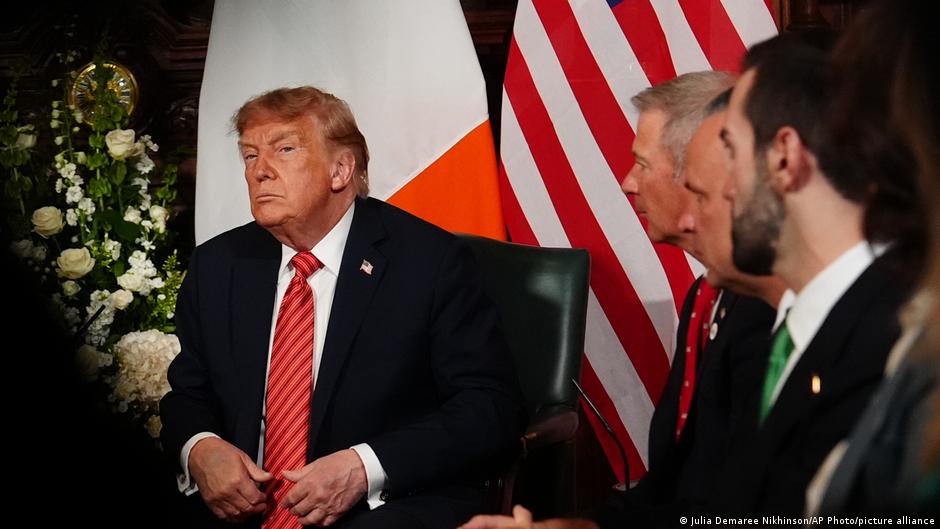
US President Donald Trump has announced that a 10% tariff on Irish whiskey will be lifted, a move likely to be watched closely by drinks exporters, distributors and investors across Britain and the European Union as transatlantic trade tensions remain a live concern for consumer goods markets.
Trump made the statement as he concluded a visit to Ireland, speaking on Sunday, September 13, to a cheering crowd of Irish golf enthusiasts at a tournament held at a golf club owned by his family. According to Trump, he had yielded to numerous requests to remove the US import duty on Irish whiskey.
The tariff currently forms part of duties applied to all exports of wine and spirits from the European Union to the United States. Its removal, if fully implemented, would therefore be significant not only for Irish producers but also for the wider EU drinks sector, where access to the US market is central to growth, pricing and brand positioning.
"Nothing characterises the trade relationship between the US and Ireland better than Irish whiskey," Irish Whiskey Association director Eoin O'Cathain said in a statement.
The Irish Whiskey Association welcomed the announcement and said it hoped the decision would be fully implemented, according to Reuters. The association's response underlined the importance of the US market for Irish whiskey, a category that has become one of Ireland's most visible consumer exports.
Why London and EU markets will be watching
For British and European business audiences, the decision lands at the intersection of trade policy, premium consumer goods and currency-sensitive export flows. London-listed drinks groups, UK-based importers and European beverage distributors all monitor US tariff policy because even targeted duties can affect margins, inventory decisions and retail pricing across the supply chain.
The immediate source material does not report a specific reaction in sterling or on London markets. Still, the announcement may be assessed by traders and analysts as a modest easing signal in the broader US-EU trade relationship, particularly because the duty sits within a wider tariff framework covering EU wine and spirits exports. Any reduction in trade friction can matter for sentiment toward European consumer staples and luxury-linked drinks categories.
Sterling exposure is also relevant for UK businesses that import Irish whiskey, distribute EU spirits, or supply hospitality and retail channels. While Irish whiskey is an EU export rather than a UK-origin product, Britain remains a major drinks market and a major financial centre for pricing European consumer stocks. A change in US tariff treatment can feed into expectations for volumes, promotional spending and wholesale demand, even where the direct legal beneficiary is in Ireland.
For Ireland, the announcement carries particular weight because whiskey is closely tied to national branding and export identity. Trump said that among those who had asked him to remove the Washington-imposed tariff were Irish Prime Minister Micheal Martin and leading Irish golfer Shane Lowry. The setting of the announcement, at a family-owned golf club before an enthusiastic audience, gave the trade decision a highly public and symbolic backdrop.
A tariff decision with wider trade implications
The 10% duty has been levied as part of tariffs covering all EU wine and spirits exports to the United States. That wider context is important: the Irish whiskey decision is not merely a bilateral gesture toward Dublin but a potential adjustment within a larger trade regime affecting European producers.
For EU policymakers and business groups, the key question will be implementation. The Irish Whiskey Association explicitly said it hoped the decision would be fully carried out. Until the change is enacted in the relevant US tariff schedule or administrative process, companies may treat the announcement as positive but not yet complete.
That distinction matters commercially. Importers and exporters typically plan shipments, hedge currency exposure and negotiate supply agreements months ahead. A declared removal of a tariff can improve expectations, but businesses usually need clarity on timing, legal scope and customs treatment before adjusting prices or contracts.
In London, the development is likely to be read through the broader lens of US trade policy toward Europe. The UK is no longer part of the EU, but British investors, retailers and drinks companies remain closely linked to European supply chains. London market participants also track tariff changes because many beverage and consumer groups have multinational operations and earnings exposed to both the US dollar and European currencies.
The announcement may also be viewed as a reminder that trade policy can shift through political lobbying as well as formal negotiation. Trump said he had received numerous requests to remove the duty, including from Ireland's prime minister and Shane Lowry. The public nature of that acknowledgement could encourage other affected industries to press for similar relief.
For now, the central factual development is straightforward: Trump has said the 10% US tariff on Irish whiskey will be cancelled, the Irish whiskey industry has welcomed the statement, and the duty remains part of a broader framework covering EU wine and spirits exports to the US. The business significance will depend on whether the announcement is translated into full implementation and whether it signals a narrower exemption or a broader softening of US treatment of European drinks exports.