Ukraine Sanctions Organisers of Russian Duma Votes in Occupied Regions
Kyiv’s move adds pressure on EU sanctions policy as Britain and European markets assess legal and geopolitical risk tied to Russia.
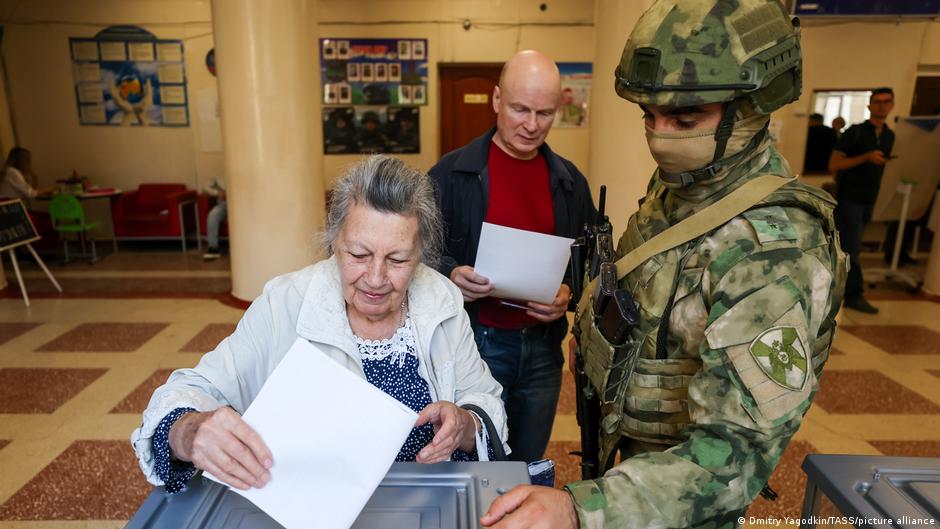
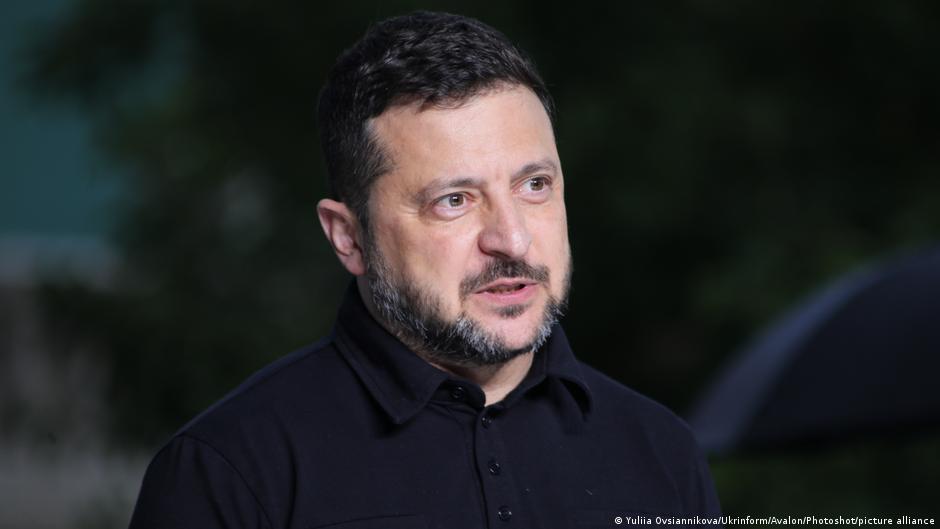
Ukrainian President Volodymyr Zelensky has imposed sanctions on people involved in organising Russian State Duma elections on occupied Ukrainian territories, a step that puts fresh emphasis on the sanctions agenda facing the European Union and closely watched by policymakers and investors in London.
The measures, announced on Saturday, September 27, target 44 people. According to the Office of the President of Ukraine, 38 of those sanctioned hold both Ukrainian and Russian citizenship. Ukrainian officials said some of the individuals had already been “elected” as so-called deputies of illegally created local councils on Ukraine’s temporarily occupied territory.
The Russian State Duma elections were held from September 18 to 20. For the first time in parliamentary elections, Russian authorities organised voting in the occupied territories of Ukraine’s Kherson, Zaporizhzhia, Donetsk and Luhansk regions. Ukraine and its Western allies have recognised both the process and its results as illegal.
Ukraine and its Western allies have recognised both the voting process and its results as illegal.
The European Union has also said it is ready to impose sanctions on people who helped conduct the elections on occupied Ukrainian territory. That makes Kyiv’s latest move relevant beyond Ukraine’s domestic legal response: it sets out a group of names and alleged roles that could inform wider European restrictive measures.
Sanctions Pressure Moves Back to Europe
For Britain and the European Union, the development matters because sanctions against Russia remain a central economic and diplomatic instrument. London, although outside the EU, has generally maintained a closely aligned sanctions posture with European partners and the United States since Russia’s full-scale invasion of Ukraine in 2022. Any expansion of EU listings can increase the compliance burden for banks, insurers, commodity traders, law firms and shipping-linked businesses operating across European jurisdictions.
The UK market angle is therefore less about an immediate mechanical effect on sterling and more about risk perception. Currency traders in London routinely treat escalation in sanctions policy, energy security concerns and geopolitical uncertainty around Russia as part of the broader backdrop for sterling and European assets. A new round of designations by Kyiv, and the prospect of EU follow-through, reinforces the political risk premium surrounding Russia-related exposure.
For London-listed companies, the practical reaction is likely to be concentrated in compliance rather than headline trading. Firms with legacy Russia-related operations, counterparties in Eastern Europe, or exposure to cross-border financial flows are likely to monitor whether the EU or UK authorities adopt further measures linked to the occupied-region vote. Even where no direct exposure exists, sanctions developments can affect due diligence, banking relationships and investor scrutiny.
The elections themselves marked a new stage in Russia’s effort to integrate occupied territories into its federal political system. For the 2026 State Duma elections, Russian authorities for the first time created separate single-mandate constituencies for Ukrainian regions occupied after 2022. Moscow then declared several candidates elected from those constituencies.
According to the announced Russian results, Irina Kuksenkova, a war correspondent for Channel One, and Alexander Borodai, a former “head” of the self-proclaimed republic, were elected in single-mandate districts in the so-called “DNR”. In the so-called “LNR”, Russia named local parliament deputies Denis Kolesnikov and Ivan Sanayev as elected. In the occupied parts of Zaporizhzhia region, Alexei Tikhomirov was declared elected, while in Kherson region the named winner was Elena Dmitruk, described as a deputy chair of the local parliament. All of them ran for United Russia.
In addition to the single-mandate candidates, eight more representatives of the occupation authorities in Ukrainian territories entered the Russian State Duma through federal party lists. Among them was Serhiy Arbuzov, a former first deputy prime minister of Ukraine under President Viktor Yanukovych and former head of the National Bank of Ukraine, who was nominated by the party A Just Russia.
Business Watches the Next EU Step
For European business, the key question is whether Kyiv’s sanctions list becomes a precursor to a wider EU package. Brussels has already signalled readiness to act against people who facilitated the vote. If that readiness turns into formal listings, companies operating in the EU would face binding obligations to freeze assets and avoid making funds or economic resources available to designated individuals.
British companies will also watch the UK government’s response. The City of London remains one of the world’s main centres for sanctions compliance, legal advisory work and financial screening. Even when UK and EU lists are not identical, international banks and multinational companies often apply a cautious standard across jurisdictions to reduce enforcement and reputational risks.
The issue also lands at a sensitive moment for European policymakers balancing support for Ukraine with economic pressures at home. Sanctions policy can influence investor expectations around energy security, defence spending, fiscal commitments and trade flows. While the Ukrainian announcement itself does not establish a direct sterling move, it contributes to the broader geopolitical environment that London currency and equity desks continue to monitor.
Kyiv’s message is that participation in the organisation of Russian elections on occupied Ukrainian land carries consequences. For the EU and the UK, the test now is whether national measures taken by Ukraine are followed by coordinated European action, and how quickly businesses must adjust compliance systems to reflect any new designations.