US Cuts Joint Military Drills with South Korea Amid Geopolitical Shifts Impacting UK and EU Markets
Washington scales back exercises with Seoul, raising questions over regional security and sterling-market responses in London.
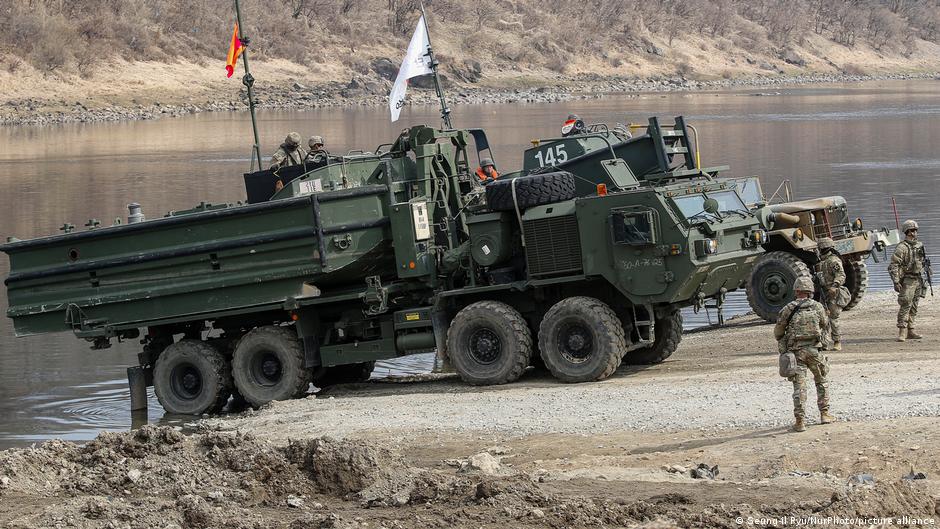
The United States has announced a significant reduction in the scale of its joint military exercises with South Korea, a move with wide-ranging implications for geopolitical stability and financial markets across the UK and Europe.
President Donald Trump directed the downsizing of the Ulchi Freedom Shield drills, an annual 11-day exercise planned to begin on August 17, designed to prepare for potential aggression from North Korea. Trump emphasized his "very good relationship" with North Korean leader Kim Jong Un as a motivation for scaling back the costly military maneuvers, which have historically been funded predominantly by the US.
Implications for British and European Economic Interests
Markets in London have already begun to digest the news, with sterling experiencing cautious movements amid concerns over wider security stability in East Asia. The reduction in joint US-South Korean drills signals a recalibration of American military commitments in the region, raising questions about the future of global supply chains and trade routes critical to both UK and EU economies.
Financial analysts warn that any perceived weakening in US commitment to East Asian security could increase volatility in currency markets, impacting the British pound and the Euro. Investors are monitoring the London Stock Exchange for shifts in sectors linked to defense, technology, and manufacturing, which rely on stable geopolitical frameworks.
"This development introduces uncertainty around the US's strategic posture in Asia, a factor that directly influences investor confidence in European markets connected to the region," said a market strategist based in London.
President Trump also criticized South Korea for not supporting the US-led stance against Iran, highlighting geopolitical tensions that may further complicate alliances. The US currently maintains 28,500 troops in South Korea, underscoring the longstanding military partnership that has shaped regional security since the Korean War armistice in 1953.
South Korean President Yoon Suk-yeol has been actively pursuing dialogue with North Korea, proposing peace talks despite the absence of a formal peace treaty to end the Korean War. The UK and EU governments are closely watching these developments, aware that any shifts in East Asian security dynamics could reverberate through international trade and political alliances.
As London prepares for the potential ripple effects from reduced US military activity in the region, the focus remains on balancing strategic partnerships with economic resilience, particularly given ongoing challenges in global markets.