US Intelligence Reveals Iran Retains Majority of Military Capabilities Despite Strikes
Reports show Iran has restored around 70% of its missile arsenal, raising concerns for UK and EU security and impacting London markets.
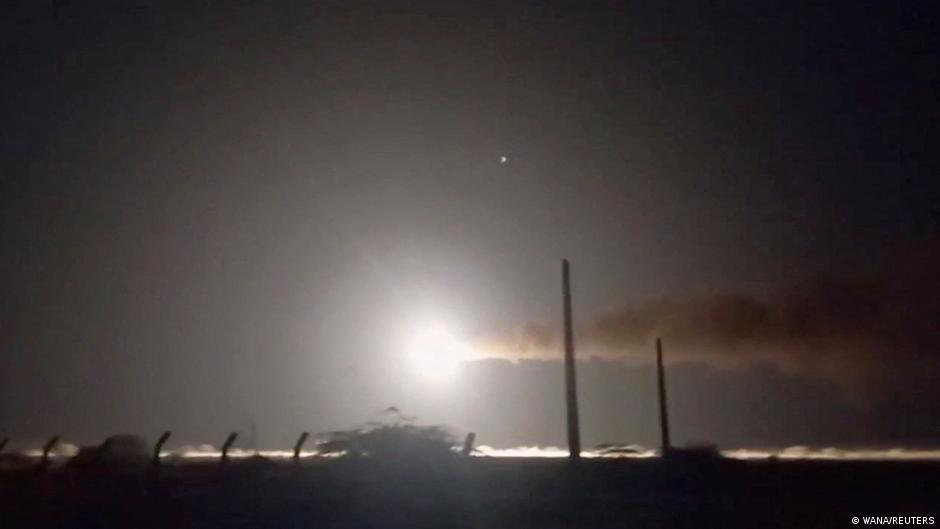
Recent US intelligence assessments indicate that Iran has preserved a significant portion of its military capabilities following US strikes, contradicting official claims of Iran's military defeat. This revelation has important implications for British and European security interests, as well as the London financial markets.
Iran’s Military Resilience and Strategic Impact
According to intelligence data, Iran currently controls approximately 70% of its mobile missile launchers and about 70% of its pre-conflict missile stockpile. This arsenal comprises ballistic missiles capable of reaching targets across the region and a smaller cache of cruise missiles designed for shorter-range strikes against ground and naval targets.
Most notably, the data highlights Iran’s restoration of 30 out of 33 missile complexes along the strategically vital Strait of Hormuz. These installations pose a tangible threat to US naval forces and oil tankers traversing this crucial maritime passage, which is of particular concern to European energy security.
“New intelligence suggests that US military leaders may have overestimated the damage inflicted on Iranian missile infrastructure and underestimated Iran’s ability to recover swiftly.”
Intelligence further reveals that Iran has regained access to around 90% of its underground missile storage and launch facilities, many of which are now considered partially or fully operational. This robust recovery contrasts sharply with earlier assertions by former US President Donald Trump and former Defense Secretary Mark Esper, who claimed Iran’s military potential had been decimated.
The Pentagon faces additional challenges: its stockpiles of critical munitions such as Tomahawk cruise missiles, Patriot air-defense rockets, and precision-guided ground-to-ground missiles are reportedly running low. Renewed military action to neutralize Iran’s missile threat could further deplete these reserves, complicating US support for European allies, notably in supplying armaments to Ukraine.
Implications for the UK, Europe, and Financial Markets
For the United Kingdom and the broader European Union, these developments heighten strategic uncertainty in an already volatile region. The security of vital energy supply routes, including the Strait of Hormuz, is paramount. Disruptions could trigger spikes in oil prices, directly impacting European economies and market stability.
London’s financial markets have been particularly sensitive to geopolitical risks affecting global energy flows. The resilience of Iran’s missile capabilities suggests a prolonged regional tension scenario, potentially leading to increased volatility in sterling and commodity-linked assets. Investors may reassess risk profiles, influencing trading strategies in sectors tied to energy and defense.
Moreover, European defence planners may face pressure to reconsider military readiness and procurement strategies in light of US munitions constraints. As Washington prioritizes its own force replenishment, delays in weapons deliveries to European nations could arise, straining transatlantic security cooperation.
White House spokesperson Olivia Welch reiterated the official US position, asserting that Iran’s military power remains "crushed," though this is contested by the intelligence findings. The Pentagon also affirmed that US forces retain sufficient resources to defend national interests, yet the broader strategic picture remains complex.
These revelations underscore the necessity for the UK and EU to closely monitor and adapt to the evolving security landscape in the Middle East, balancing diplomatic efforts with preparedness for potential disruptions to energy and trade routes critical to Europe’s stability.