Yabloko Clears Novgorod Threshold as Investors Watch Russia’s Political Risk
The liberal party’s regional result may preserve access to future State Duma races, with implications for European assessments of Russian political stability.
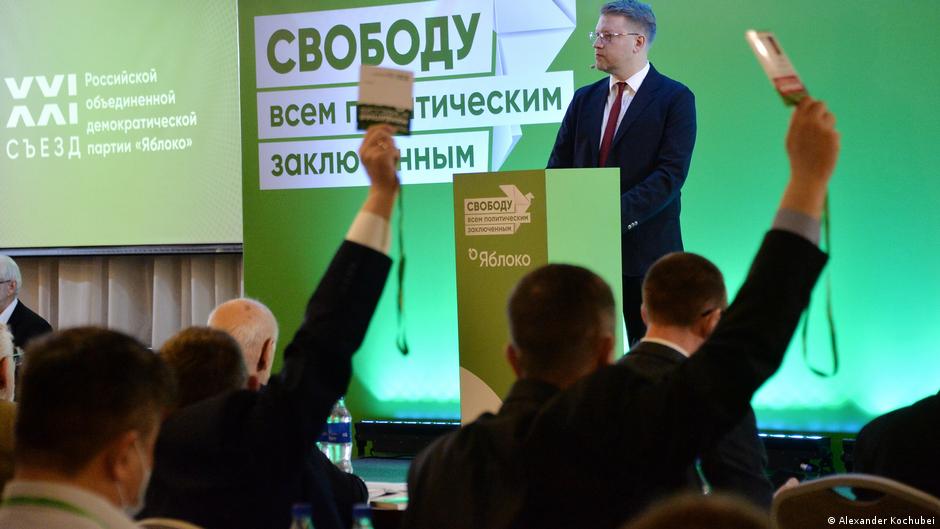
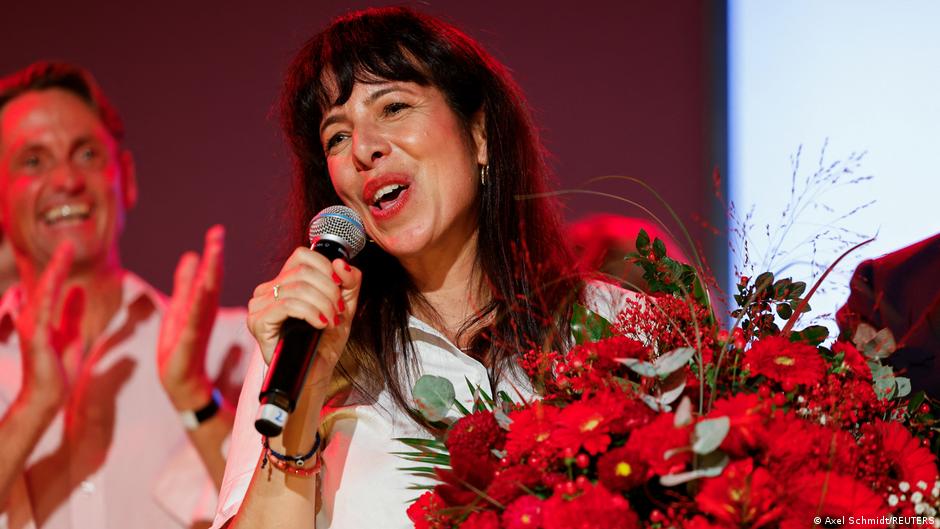
Russia’s liberal Yabloko party is set to enter the Novgorod regional legislature after securing 6.2% of the vote with 96.86% of protocols counted, according to Russia’s Central Election Commission. The result takes the party above the five percent threshold required for representation in the Novgorod Oblast Duma and may allow it to continue taking part in State Duma elections without collecting voter signatures.
For UK and European observers, the result is less about one regional chamber than about the shrinking space for organised opposition in Russia, a factor that continues to shape political risk assessments around the country. London markets and sterling are not typically moved by Russian regional election results alone, but investors with exposure to European energy, defence, banking, commodities and emerging-market risk watch these signals as part of the broader picture around sanctions, war policy and institutional stability.
Yabloko’s showing in Novgorod marks an improvement on the same level of election in 2021, when the party received 3.83% of votes. On the current count, United Russia leads the regional contest with 38.37%. The Communist Party has 14.54%, the Liberal Democratic Party has 12.01%, New People has 9.87%, A Just Russia has 7.7%, and the Party of Pensioners has 5.55%.
Regional Result With National Consequences
The practical significance for Yabloko lies in election law mechanics. A seat in a regional parliament can help the party avoid the burden of collecting signatures for State Duma participation. That procedural advantage matters especially after the party’s federal list was removed from the State Duma election by Russia’s Supreme Court on 10 August, following a lawsuit by Rodina. Rodina accused Yabloko, among other things, of copyright violations and illegal payments for election campaigning.
Yabloko candidates are still taking part in voting in single-mandate constituencies. Yet the removal of the federal list has made the Novgorod result politically significant beyond the region. A source in Yabloko, speaking anonymously, said the party was pleased with the preliminary outcome and underlined its practical value.
“The presence of a deputy in a regional parliament will allow Yabloko to continue taking part in State Duma elections without collecting signatures.”
The source said that before these elections Yabloko had three factions, in Pskov, St Petersburg and Karelia, but that the party’s lists there were removed. That background makes Novgorod a rare institutional opening for a party that has long positioned itself as a liberal opposition force inside Russia’s formal political system.
The Novgorod campaign, according to the same source, took place under extremely difficult conditions. The entire Yabloko list on the ballot was marked with a label linked to the status of “foreign agent” because the list leader, party deputy chair Anna Cherepanova, had been recognised as affiliated with a “foreign agent”. The source also said Cherepanova herself was removed from the election because of an administrative case under Article 20.3 of Russia’s Code of Administrative Offences.
Despite those constraints, Yabloko’s vote share was sufficient to cross the threshold. The source argued that neither the labelling nor the removal of the list leader prevented the party from achieving a strong result.
Why Europe Is Watching
For British and EU policymakers, the most important context is Russia’s war in Ukraine and the degree to which dissenting political positions remain visible in Russia’s electoral system. Among Russian parties, Yabloko was the only one to speak against the war in Ukraine. That fact has made the party a reference point for European officials assessing whether there remains any meaningful anti-war representation within Russia’s managed political process.
Jürgen Hardt, the foreign policy spokesman for the CDU/CSU parliamentary group in the Bundestag, previously said that by excluding Yabloko, Russian President Vladimir Putin had removed “the last significant voice of opposition” from the electoral process. The comment reflects a wider European reading of Russia’s elections not as ordinary democratic competition, but as an indicator of how far the Kremlin is prepared to restrict dissent during wartime.
For the City of London, the immediate financial consequences of a Novgorod regional election are limited. Sterling trading is driven more directly by Bank of England policy, inflation expectations, UK fiscal signals and global risk appetite. Still, Russia remains a geopolitical input into European market pricing. Any sign that political channels inside Russia are narrowing further tends to reinforce assumptions of prolonged confrontation with the West, sustained sanctions and elevated defence and energy-security spending across Europe.
That matters for UK-listed energy majors, defence contractors, commodity traders, banks with compliance exposure and investors tracking European industrial costs. It also feeds into policy discussions in Brussels, Berlin and London over sanctions durability, Ukraine support and the long-term investment climate around Russia-linked assets. The Novgorod result does not change those debates by itself, but it gives analysts another data point in assessing whether any legal opposition space still exists.
The Central Election Commission’s count is not yet complete, with the published figures based on 96.86% of protocols. On those numbers, however, Yabloko has cleared the five percent barrier and is positioned to regain a regional foothold at a time when its federal prospects have been sharply constrained. For European investors and officials, the message is one of continuity: Russia’s formal electoral structures still produce limited openings, but the broader political environment remains tightly controlled and deeply shaped by the war in Ukraine.