Zelenskyy Tells UN Putin Is ‘Patient Zero’ as War Risks Hit Europe
Ukraine’s president warned that Russian escalation threatens energy security, markets and political stability across Europe.
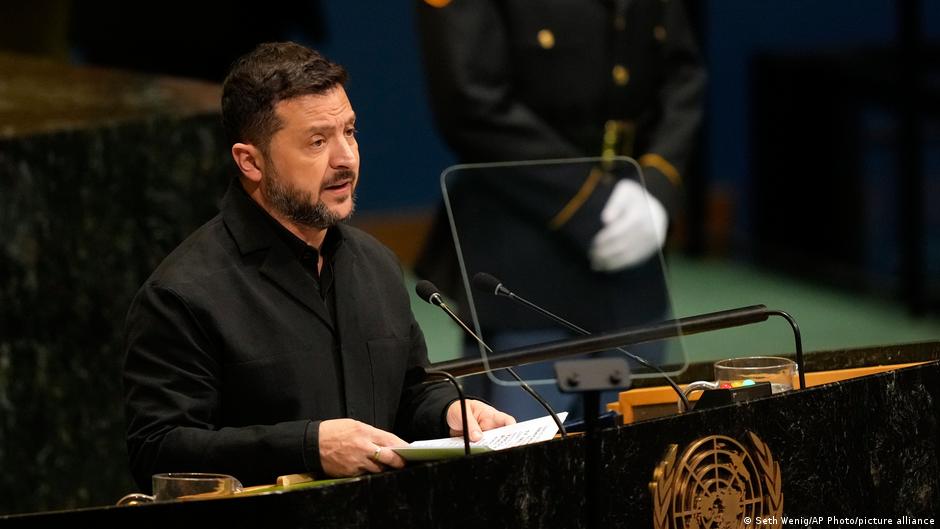
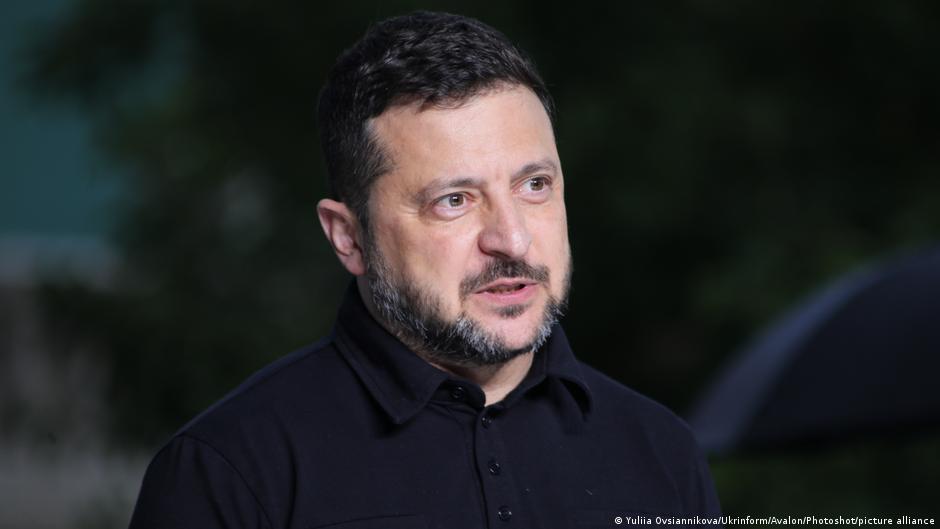
Ukrainian President Volodymyr Zelenskyy used his address to the United Nations General Assembly in New York on Wednesday, September 23, to cast Vladimir Putin as the source of a widening global security and economic threat, calling the Russian president “patient zero” for an idea of war that spreads instability far beyond Ukraine’s borders.
For British and European policymakers, the speech landed as a reminder that the conflict remains not only a military confrontation on the EU’s eastern flank, but also a persistent risk to energy prices, investor sentiment and fiscal planning. Any renewed attacks on Ukraine’s power and heating systems would again raise questions over winter energy resilience, the cost of continued support for Kyiv and the wider pressure on European households and businesses.
Zelenskyy said Putin must be stopped from acting and from being able to spread what he described as evil further. Wherever the idea of war spreads, he said, it brings “only pain, instability, new risks and, of course, new crises.”
“He must not be allowed to act and must not be given the opportunity to spread this evil further,” Zelenskyy said.
The Ukrainian leader’s language was stark, but the underlying message was familiar to European capitals: Moscow’s war continues to carry direct consequences for security, energy and markets across the continent. In London, where investors remain sensitive to geopolitical shocks, the prospect of further escalation would be watched closely for its potential effect on sterling, energy-linked equities and broader risk appetite.
Energy and Market Pressure
Zelenskyy argued that Russia’s oil industry, which he described as a point of national pride for Moscow, was for the first time in Russian history operating “on its last legs.” He called that a humiliating defeat for a country that holds a permanent seat on the UN Security Council and takes pride in its oil exports.
He stressed, however, that Ukraine’s objective was not oil itself, nor petrol, diesel, refineries or ports. The target, he said, was Russia’s ability to finance the war and prolong it. That distinction is significant for European governments and companies, which have spent the war balancing sanctions pressure, energy security and inflation risks.
For the UK and the European Union, Russia’s capacity to fund military operations through energy revenue has been a central policy concern since the full-scale invasion began. Zelenskyy’s comments underscored Kyiv’s view that pressure on that revenue stream is part of the battlefield, even as European economies continue to manage the after-effects of the energy shock triggered by the war.
The president also warned that if Russia continues to attack Ukraine’s energy system and heating infrastructure, Kyiv would try to ensure that Russia’s “General Frost” switches sides this winter, a reference to the possibility of retaliatory strikes. That warning will be read in Europe against the memory of previous winter campaigns aimed at Ukraine’s power grid, which caused blackouts and intensified the humanitarian burden.
Any deterioration in the energy picture could have implications for European gas and power prices, even if the region has reduced its dependence on Russian supplies. In the UK, such shocks can feed into inflation expectations, the outlook for household bills and market assumptions about interest rates, all of which matter for sterling and London-listed companies exposed to energy, defence and infrastructure spending.
Battlefield Losses and AI Warning
Zelenskyy said that from January to August, Russian armed forces lost 248,964 people on the battlefield in Ukraine. “Putin pays 248 people for every kilometre. Does anyone still think he is reasonable?” he asked. He added that citizens of 47 other countries are fighting on the side of the Russian army and are also dying on the battlefield.
The Ukrainian president also issued a warning about the accelerating role of technology in warfare. As early as next year, he said, there is a real possibility that decisions on the battlefield could begin to be made by artificial intelligence, not only by humans.
“We need peace before we reach that point,” Zelenskyy said.
That warning carries particular resonance for Europe’s defence and technology sectors. Governments in London, Brussels and across NATO are already debating the military use of artificial intelligence, autonomous systems and drone warfare. Ukraine has become a testing ground for new forms of conflict, and Zelenskyy’s remarks suggested that the window for preventing further technological escalation may be narrowing.
The speech also came against a backdrop of intensified Russian attacks. According to an analysis by AFP, the first 18 days of September saw more Russian strikes than any full month since the start of the war in Ukraine, with the exception of March 2022.
At the same time, Russian Foreign Minister Sergey Lavrov told the UN Security Council that there would be no “pause” in hostilities. His statement reinforced the sense that diplomatic space remains limited, even as Kyiv urges international partners to maintain pressure on Moscow.
For European business leaders, the message from New York was that the war remains a material variable in the regional outlook. Defence spending, energy security, sanctions enforcement and reconstruction planning all carry budgetary and market consequences. London’s role as a financial centre means any shift in expectations around the conflict can quickly pass through currency markets, government bond yields and sector valuations.
Zelenskyy’s intervention was aimed at the UN, but its implications were squarely continental. If Russia escalates attacks on Ukrainian energy infrastructure, Europe faces renewed winter uncertainty. If Russian oil revenues continue to be squeezed, markets will watch for supply and price effects. And if the battlefield moves closer to AI-driven decision-making, the political and regulatory questions for Britain and the EU will become more urgent.
The Ukrainian president’s core argument was that allowing the war to spread as an idea creates new crises wherever it takes hold. For the UK and Europe, that warning is not abstract. It is already visible in energy policy, defence budgets, inflation risks and the daily calculations of markets trying to price a conflict with no clear pause in sight.